
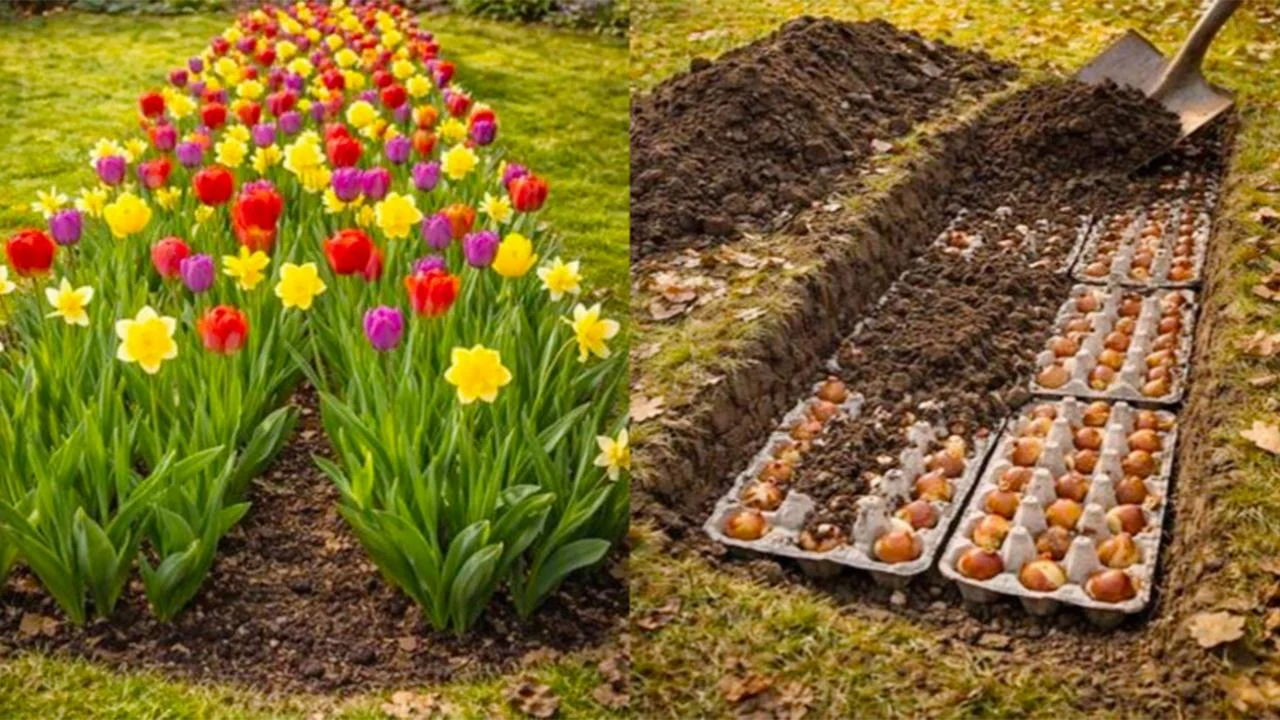
Many gardeners spend significant time measuring distances, adjusting bulb positions, and correcting uneven rows. Fortunately, there is a simple and clever solution that combines efficiency, organization, and sustainability: the egg carton trench method.
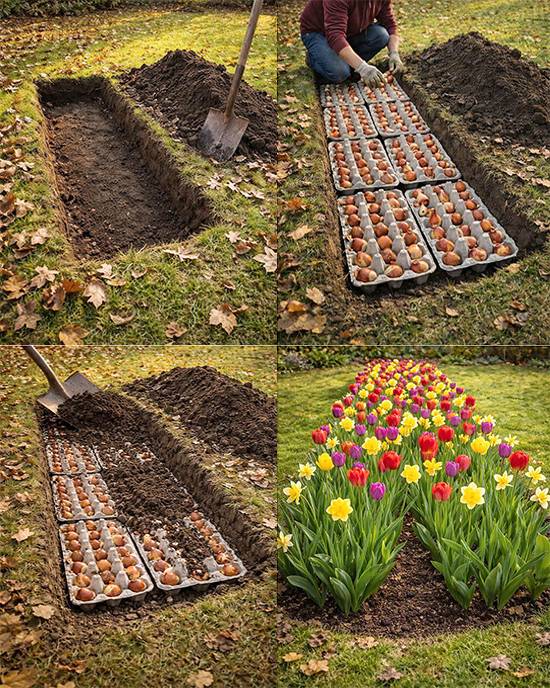
This creative gardening technique uses recycled cardboard egg cartons as natural planting guides inside a shallow trench. Each cup in the carton holds a single bulb, ensuring perfect spacing and preventing bulbs from shifting while the soil is added. The cartons gradually decompose in the soil, contributing organic matter while allowing roots to grow freely. Gardeners who use this method often find that it saves time, reduces mistakes, and produces neat, professional-looking flower beds. In this article, you will learn how the egg carton trench method works, why it is effective, which bulbs are best suited for it, and how to achieve the healthiest possible blooms.
How the egg carton trench method works
The egg carton trench method combines two key principles of successful bulb planting: consistent depth and even spacing. Instead of digging individual holes for each bulb, gardeners dig one long trench that matches the recommended planting depth for the bulbs they are using.
Once the trench is prepared, empty cardboard egg cartons are placed along the bottom. Each cup in the carton becomes a small planting pocket for a single bulb. The bulbs are placed inside the cups with the pointed end facing upward, ensuring they remain upright and properly positioned.
After placing the bulbs, the trench is filled back in with soil and watered thoroughly. As moisture reaches the cartons, the cardboard softens and slowly breaks down. This process does not restrict root growth. Instead, it adds small amounts of organic material to the soil, which can help improve soil structure over time.
The result is a tidy, well-organized planting layout that allows bulbs to emerge evenly, producing a balanced and visually pleasing display in the garden.
Step-by-step guide to planting bulbs with egg cartons
Using egg cartons for planting bulbs is a straightforward process that requires minimal tools and preparation. The method works well for gardeners of all experience levels.
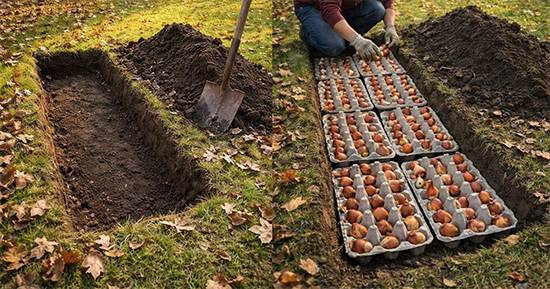
Start by selecting the area where you want your flowers to grow. Choose a location with appropriate sunlight and well-draining soil. Next, dig a straight trench that matches the recommended planting depth for the bulbs you plan to plant.
Place empty cardboard egg cartons along the bottom of the trench. If necessary, trim the cartons so they fit neatly within the trench length. Each cup should face upward to hold a bulb securely.
Place one bulb in each cup with the pointed end facing upward. This positioning ensures the plant will grow in the correct direction once the roots develop.
After positioning all the bulbs, gently fill the trench with soil. Make sure the bulbs remain in place as the soil settles. Once the trench is filled, water the area thoroughly. This helps eliminate air pockets and encourages early root development.
Within weeks or months, depending on the type of bulb and planting season, shoots will begin to emerge in perfectly spaced rows.
Benefits of using egg cartons for planting flower bulbs
The egg carton planting technique offers several practical advantages that make it appealing to both beginner and experienced gardeners.
One of the biggest benefits is precise spacing. Because each egg cup acts as a guide, bulbs are automatically placed at consistent distances from each other. This creates a clean, professional appearance once the flowers bloom.
Another advantage is uniform planting depth. When all cartons are placed at the same level in the trench, each bulb is planted at the correct depth. This consistency helps bulbs sprout and bloom at roughly the same time.
The method also speeds up the planting process. Instead of digging individual holes for every bulb, gardeners can plant large numbers quickly using a single trench.
In addition, the technique is environmentally friendly. Reusing cardboard egg cartons reduces waste and introduces biodegradable material into the soil. As the cartons decompose, they contribute small amounts of organic matter that can improve soil quality. Finally, the cups help prevent bulbs from rolling or tipping during planting, reducing damage and ensuring proper orientation.
Bulbs that work best with the egg carton technique
While this method works well for many types of bulbs, it is particularly effective for small to medium-sized varieties that do not require large spacing between plants.
Popular spring-flowering bulbs that work well include tulips, daffodils, crocus, hyacinths, grape hyacinths, snowdrops, scilla, and anemone blanda. These plants typically grow well when spaced closely and planted at moderate depths.
Some summer-flowering bulbs can also benefit from this technique. Gladiolus, freesia, ranunculus, ixias, and dwarf lilies are good candidates for egg carton planting.
Very large bulbs, such as giant ornamental alliums or large Asiatic lilies, generally require deeper planting and wider spacing. These varieties are usually better planted individually rather than in egg carton rows. Selecting the right bulbs for the method ensures that plants have enough space to develop healthy roots and produce strong blooms.
Choosing suitable egg cartons for gardening
Not all egg cartons are suitable for planting bulbs in the soil. The best choice is plain cardboard or recycled paper cartons that are free from coatings or chemical treatments.
These natural materials break down easily in moist soil and do not interfere with root growth. They also contribute organic material that can improve soil structure over time.
Gardeners should avoid using plastic or Styrofoam egg cartons. These materials do not decompose and may create barriers that restrict root expansion. Wax-coated cartons should also be avoided because the coating slows decomposition.
For improved drainage, gardeners can poke small holes in the bottom of each cup before placing the cartons in the trench. This is especially helpful in heavy or clay soils where water may accumulate.
Planting depth and soil preparation guidelines
Correct planting depth is one of the most important factors for successful bulb growth. A general guideline is to plant bulbs at a depth equal to two to three times their height.
For example, tulips and daffodils are typically planted about 12 to 15 centimeters deep. Hyacinths usually grow well at depths between 10 and 12 centimeters, while smaller bulbs such as crocus and muscari are planted about 6 to 8 centimeters deep.
Before placing egg cartons in the trench, gardeners should prepare the soil by loosening it and incorporating organic matter such as compost, leaf mold, or well-rotted manure. This improves drainage and provides nutrients for developing roots. Good drainage is particularly important because bulbs can rot if they remain in waterlogged soil for extended periods.
Expert tips for healthier blooms and stronger plants
Successful bulb gardening depends on a combination of good planting practices and proper seasonal care. Choosing high-quality bulbs is essential. Healthy bulbs should feel firm, dry, and free from mold or visible damage.
Timing is also important. Spring-flowering bulbs are usually planted in autumn so they can experience the winter chilling period needed for proper blooming. Summer-flowering bulbs are generally planted in spring after the risk of frost has passed.
Watering should be done carefully. After planting, water deeply to settle the soil and activate root growth. During winter, avoid frequent watering unless the soil becomes extremely dry.
Applying a light layer of mulch such as straw, shredded leaves, or wood chips can help regulate soil temperature and protect bulbs from extreme weather.
Another important tip is to allow foliage to die back naturally after flowering. Green leaves continue producing energy that the bulb stores for the next growing season. Removing them too early can reduce the quality of future blooms.
The egg carton trench method demonstrates how simple ideas can lead to highly effective gardening solutions. By combining recycled materials with practical planting techniques, gardeners can achieve evenly spaced rows, consistent planting depth, and healthier root development.
This method saves time, reduces planting errors, and helps create visually appealing flower beds that bloom in organized patterns. It also supports sustainable gardening practices by reusing biodegradable materials that eventually enrich the soil.
When used with high-quality bulbs, proper planting depth, and well-prepared soil, the egg carton technique can produce vibrant flowers that return year after year. For gardeners seeking a practical, eco-friendly approach to bulb planting, this clever method offers an efficient way to grow beautiful and reliable blooms.





Yorumlar
Kalan Karakter: