

According to these accounts, the enormous bird, nicknamed the "Giant Eagle of the Border," possesses an astonishing wingspan of nearly 10 feet, making it significantly larger than any documented eagle native to North America. If verified, such a discovery could reshape scientific understanding of modern birds of prey, their evolution, and the biological limits of flight.
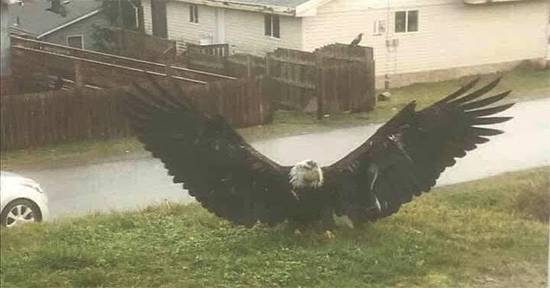
The story describes a carefully coordinated wildlife operation involving thermal imaging, GPS tracking, and conservation specialists who safely captured the bird without causing harm. Researchers are now reportedly conducting DNA sequencing, feather analysis, and metabolic studies to determine whether the bird represents an unknown species, a rare genetic variation, or an extraordinary case of gigantism. While the claims remain highly unusual and have not yet been confirmed through peer-reviewed scientific publications, the possibility has generated widespread discussion among bird lovers, researchers, and conservationists. Whether this giant eagle proves to be a groundbreaking scientific discovery or an extraordinary wildlife mystery, it has certainly reminded people that nature still has the power to surprise us.
The mysterious discovery near Brownsville, Texas
The remarkable story began when hikers exploring an area near the U.S.–Mexico border reportedly noticed an enormous shadow moving across the landscape. Looking upward, they claimed to see a massive bird soaring high above the terrain. Witnesses described a bird unlike anything they had ever observed, with exceptionally broad wings and an imposing silhouette.
Authorities and wildlife specialists were reportedly notified soon after the sighting. Because of the unusual descriptions, experts organized an investigation to determine whether the reports were accurate. Brownsville and the surrounding Rio Grande Valley already host an impressive variety of bird species, making the region one of North America's premier birdwatching destinations. However, no known native eagle approaches the extraordinary dimensions described in these reports.
The unusual circumstances quickly transformed a local wildlife sighting into an international topic of discussion.
According to the reports, wildlife experts organized a carefully planned capture operation using modern conservation technology. Thermal imaging equipment reportedly helped track the bird during cooler hours, while GPS technology allowed specialists to monitor its movements without causing unnecessary stress.
The operation was described as a model of ethical wildlife management. Instead of aggressive capture methods, conservation teams allegedly relied on techniques designed to minimize risk for both the bird and the researchers involved.
Once safely secured, the enormous raptor was transported to a specialized conservation facility in Brownsville. There, veterinarians and ornithologists reportedly began comprehensive medical examinations to assess its overall health and document its remarkable physical characteristics.
Although these details have attracted significant public interest, independent scientific confirmation of the event has not yet been published.
Scientific investigations underway
Researchers are reportedly conducting an extensive series of scientific tests to understand exactly what this unusual bird might be. DNA sequencing is considered one of the most important tools because it could reveal whether the eagle belongs to a known species or represents something entirely different.
Scientists are also said to be studying the bird's metabolism, skeletal structure, muscle composition, and feather characteristics. Feather analysis may provide valuable clues about its diet, migration routes, habitat preferences, and environmental history.
Several possible explanations have been suggested by those discussing the discovery:
- An undiscovered species of eagle.
- A previously unknown subspecies.
- An extremely rare case of genetic gigantism.
- An unusual hybrid resulting from closely related raptor species.
At present, these possibilities remain speculative until supported by verified scientific evidence and peer-reviewed research.
How large could this bird actually be?
One of the most striking claims surrounding the Giant Eagle of the Border is its reported wingspan of nearly 10 feet. For comparison, the Bald Eagle typically reaches a wingspan between six and eight feet, while the Golden Eagle generally measures between six and seven and a half feet.
A wingspan approaching 10 feet would place this mysterious bird among the largest flying raptors ever recorded in modern times. Such dimensions naturally raise questions about flight mechanics, hunting behavior, and energy requirements.
Large birds require specialized adaptations to remain airborne efficiently. Their skeletal systems, wing loading, muscle strength, and soaring techniques must all work together to compensate for increased body mass. Scientists would therefore be especially interested in understanding how such a bird achieves sustained flight if the reported measurements prove accurate.
The reported discovery has prompted many researchers and bird enthusiasts to compare the mysterious Texas raptor with several extinct birds of prey.
One of the most famous examples is Haast's Eagle, which once lived in New Zealand. Haast's Eagle was among the largest eagles known to science and preyed upon enormous flightless moa birds before becoming extinct centuries ago.
Other prehistoric birds, including Argentavis magnificens, demonstrated that exceptionally large flying birds once existed. Although Argentavis was not an eagle, it remains one of the largest flying birds ever discovered in the fossil record.
These extinct species demonstrate that enormous flying predators have existed in Earth's history. However, finding a comparable bird alive today would represent one of the most significant ornithological discoveries of the modern era.
If the discovery were ultimately verified, it could create substantial opportunities for conservation, scientific research, and regional economic development.
Officials in the Rio Grande Valley have reportedly discussed the possibility of expanding wildlife research facilities and developing educational programs centered on the remarkable bird. A dedicated conservation sanctuary could attract researchers, students, photographers, and birdwatchers from around the world.
Ecotourism already plays an important role in South Texas, where thousands of visitors travel annually to observe rare migratory birds. A verified giant eagle would likely increase international attention and further strengthen local conservation efforts while supporting businesses throughout the region. Protecting habitat would remain a top priority to ensure the long-term survival of any newly identified species.
Why experts remain cautious
Extraordinary wildlife discoveries naturally generate excitement, but scientists emphasize the importance of careful verification before drawing conclusions. Claims involving unknown species or animals with exceptional characteristics require substantial evidence, including detailed measurements, genetic analysis, photographs, and independent review by experts.
As of now, there has been no widely recognized peer-reviewed scientific publication confirming the existence of a previously unknown giant eagle near Brownsville, Texas. Until such evidence becomes available, the story should be viewed as an intriguing report rather than an established scientific fact. This cautious approach protects the integrity of scientific research while ensuring that important discoveries are supported by reliable evidence.
The story of the Giant Eagle of the Border has captured worldwide attention by combining mystery, wildlife conservation, and the possibility of an extraordinary scientific breakthrough. Reports describing a nearly 10-foot wingspan, advanced capture techniques, and ongoing genetic research have inspired curiosity among bird enthusiasts and researchers alike.
At the same time, the claims remain unverified in the scientific literature, making it important to distinguish between exciting reports and confirmed discoveries. Whether future research validates these remarkable accounts or provides a different explanation, the fascination surrounding this mysterious raptor reflects humanity's enduring curiosity about the natural world. Stories like this remind us that while science continues to expand our knowledge, nature still has the ability to surprise us—and careful investigation is essential before rewriting what we know about the world's largest birds of prey.







Yorumlar
Kalan Karakter: