
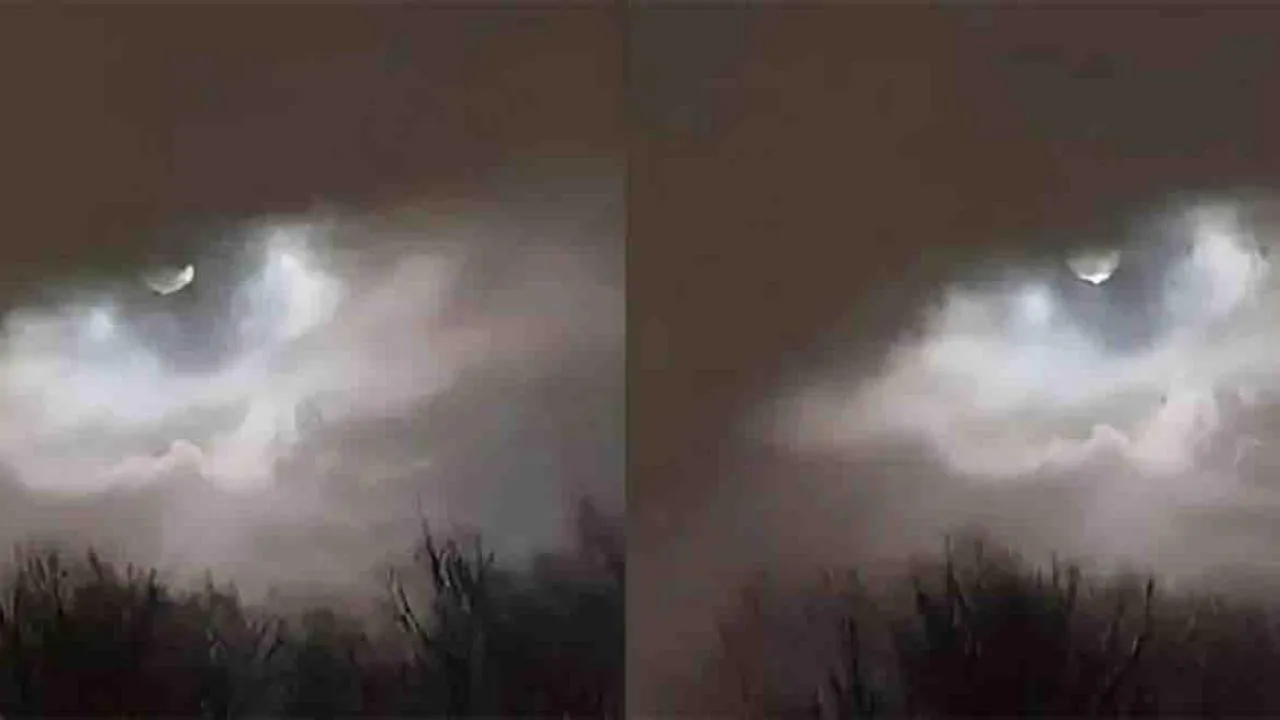
That is exactly what happened when my brother captured an unusual cloud formation just 21 kilometers from our home. At first glance, the image seemed almost unreal, prompting friends and viewers online to debate what they were seeing. Some noticed familiar shapes and symbols, while others wondered whether the strange appearance pointed to something mysterious or unexplained.
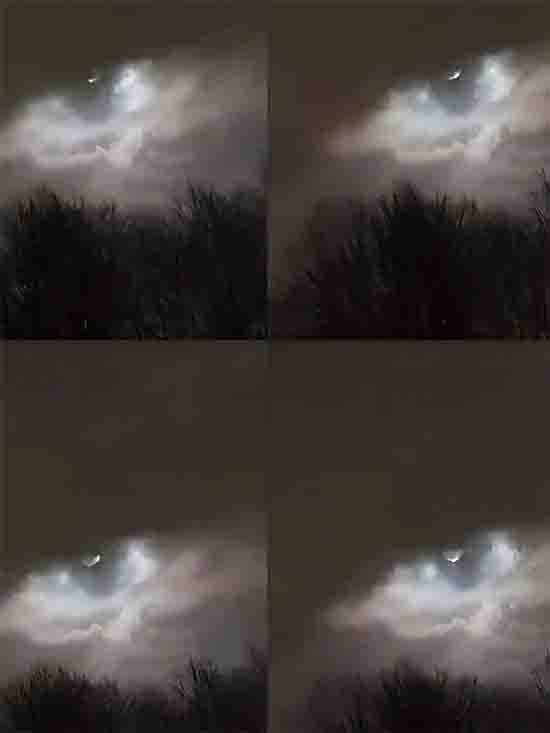
The picture quickly became a reminder of how differently people interpret the same scene. Human perception often seeks meaning and patterns, turning natural events into stories filled with curiosity and emotion. Yet behind every remarkable sky lies a combination of atmospheric conditions that scientists have studied for decades. Rare cloud formations are not supernatural mysteries, but they are extraordinary examples of nature’s creativity. The image sparked conversations not because it defied science, but because it demonstrated how wonder and explanation can coexist, making the experience unforgettable for everyone who saw it.
Why the unusual cloud attracted so much attention
Unusual cloud formations have always fascinated people. When something appears different from the familiar shapes drifting across the sky, curiosity naturally follows. The photograph taken near our home quickly became a talking point because viewers interpreted the image in very different ways.
Some people claimed to see recognizable figures, faces, or symbols hidden within the cloud. Others viewed it simply as a rare atmospheric event. Social media amplified the discussion, proving how a single image can generate countless opinions. The combination of mystery and beauty transformed an ordinary weather phenomenon into something much larger.
Searches for terms such as "strange cloud formation," "rare clouds," and "unusual sky phenomenon" often increase when remarkable images spread online. People are naturally drawn to events that challenge their expectations and invite multiple interpretations.
How pareidolia influences what we see
One reason the cloud sparked so much conversation is a psychological phenomenon called pareidolia. This is the tendency of the human brain to recognize familiar patterns in random shapes. It explains why people often see faces in the moon, animals in clouds, or hidden images in everyday objects.
Pareidolia is not unusual or irrational. In fact, it is a normal part of how humans process information. The brain constantly searches for patterns because identifying meaningful shapes helped our ancestors survive. As a result, a cloud can appear dramatically different depending on who is looking at it.
This explains why one person may interpret a cloud as a meaningful sign, while another sees nothing more than water vapor shaped by atmospheric conditions. The meaning people attach to these images often says more about perception than about the clouds themselves.
What science says about rare cloud formations
Meteorologists have long understood how unusual clouds form. Complex interactions between moisture, wind, temperature, and air pressure create a variety of fascinating shapes. Although these formations can appear mysterious, their origins are rooted in well-established atmospheric science.
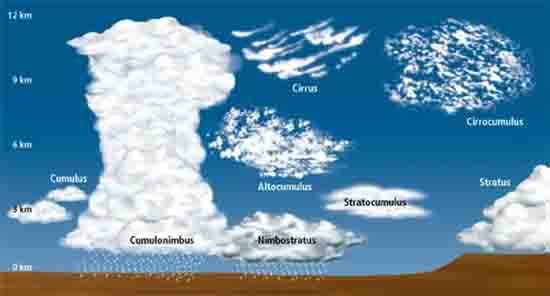
Lenticular clouds, for example, form when moist air moves over mountains or other obstacles and creates wave patterns. Because of their smooth, layered appearance, they are sometimes mistaken for unidentified flying objects.
Mammatus clouds are another striking example. These pouch-like structures hang beneath storm clouds and create dramatic visual effects. Despite their unusual appearance, they are associated with specific weather conditions and have been studied extensively.
Wave clouds and other rare formations demonstrate how subtle changes in airflow can produce remarkable patterns. Scientists continue to analyze these phenomena, but their basic mechanisms are well understood.
Why unusual skies inspire emotional reactions
Even when people understand the science behind strange cloud formations, the emotional impact remains powerful. Nature has an ability to create moments that feel larger than everyday life. A rare cloud can inspire feelings of awe, excitement, or even unease.
Part of this emotional response comes from the unexpected. Humans are accustomed to familiar patterns, so seeing something extraordinary naturally captures attention. Photographs of unusual clouds often become memorable because they create experiences that stand apart from ordinary days.
For many people, understanding the scientific explanation does not reduce the beauty of the moment. Instead, knowledge adds another layer of appreciation. Knowing how wind, moisture, and temperature interact only increases admiration for the complexity of the atmosphere.
Why people often seek deeper meanings
Throughout history, unusual events in the sky have inspired myths, stories, and spiritual interpretations. Before modern meteorology, dramatic clouds and celestial events were often viewed as signs or messages. Although science has provided explanations for many natural phenomena, the human desire to search for meaning remains strong.
People naturally connect emotional experiences with symbolic interpretations. A strange cloud might remind someone of a personal memory, while another person might see it as a source of inspiration. These reactions are deeply individual and reflect how perception shapes experience.
The widespread discussion surrounding the photograph demonstrates that people are not merely interested in weather. They are interested in meaning, mystery, and the stories that emerge from remarkable moments.
How nature and perception create unforgettable moments
The image captured just 21 kilometers from our home became memorable not because it revealed something supernatural, but because it showed how closely science and human imagination are connected. Nature provides the scene, while our minds add interpretation and emotion.
Rare cloud formations continue to fascinate people around the world because they occupy a unique space between explanation and wonder. Physics explains how they form, but personal experience determines how they are remembered.
Perhaps that is why remarkable skies leave such lasting impressions. They remind us that understanding the science does not eliminate the magic. Nature creates the canvas, atmospheric forces shape the image, and meaning arises from the minds of those who stop and look upward.







Yorumlar
Kalan Karakter: