
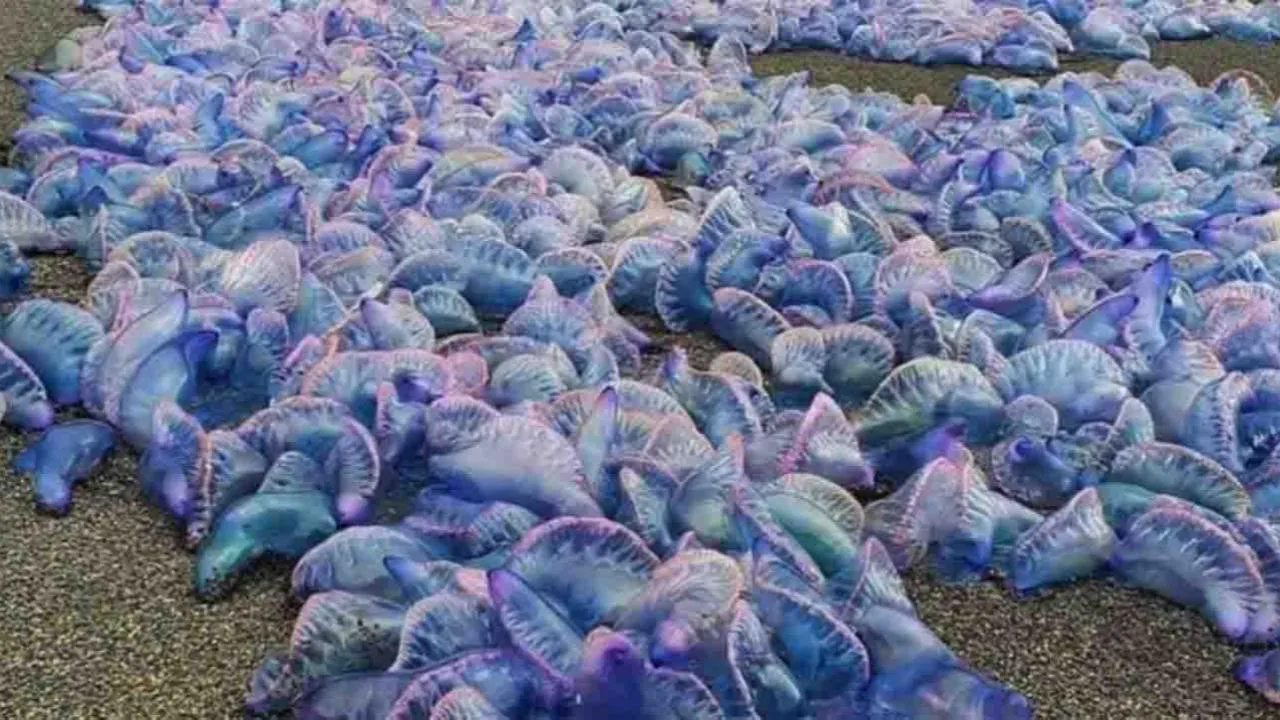
With its dazzling blue and purple colors and delicate sail-like float, this ocean drifter appears almost too beautiful to be dangerous. Yet beneath its captivating appearance lies one of the sea’s most painful stings, capable of causing severe discomfort and posing risks to humans and marine animals alike.
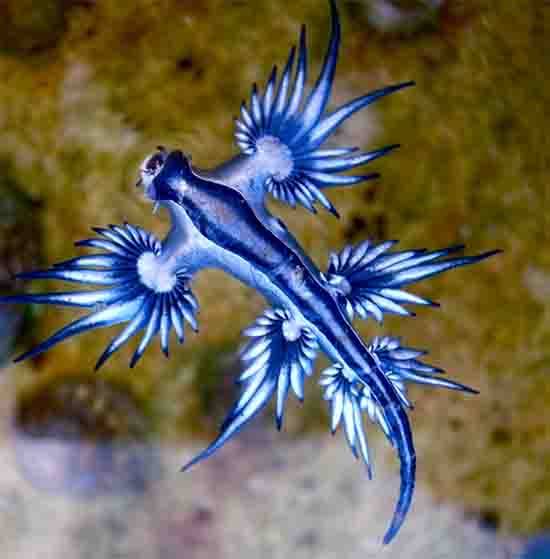
Adding even more intrigue to this story is the blue sea dragon, a tiny but remarkable predator that has evolved to feed on the Portuguese man o’ war. Despite its fragile appearance, this unusual sea slug transforms the venom of its prey into a powerful defense mechanism of its own. Their relationship offers a fascinating glimpse into the complexity of ocean ecosystems. Understanding these creatures not only helps visitors and residents stay safe but also reveals the extraordinary biodiversity that makes the waters around Ribeira Grande so unique.
Portuguese man o’ war sightings in Ribeira Grande
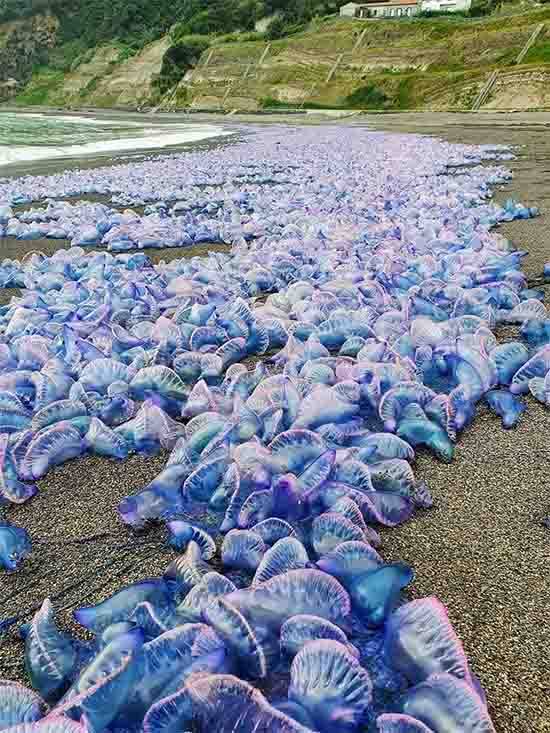
The Portuguese man o’ war is frequently spotted in the Atlantic Ocean and occasionally washes ashore near Ribeira Grande. Although commonly mistaken for a jellyfish, it is actually a siphonophore, a colony of specialized organisms working together as a single entity. Its gas-filled float, often resembling a translucent balloon, allows it to drift with the currents and winds.
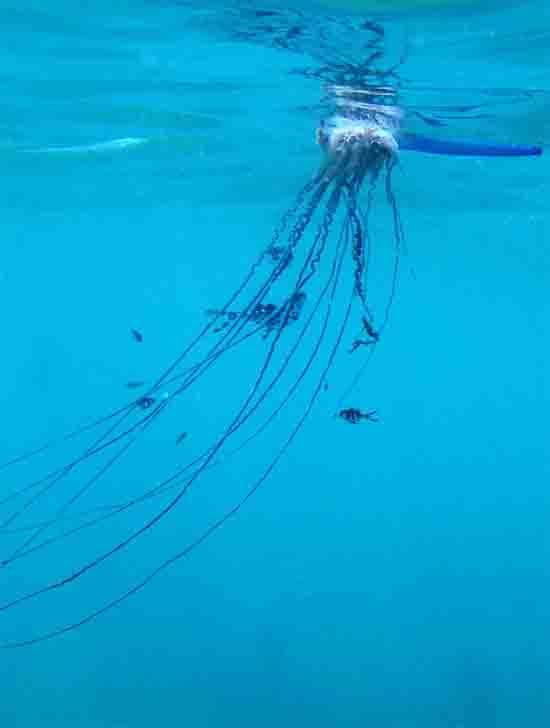
Long tentacles extending beneath the surface can reach impressive lengths and are covered with thousands of microscopic stinging cells called nematocysts. These cells release venom that quickly immobilizes fish and other small marine creatures. Even after the animal has washed onto the beach, the tentacles may remain capable of delivering painful stings.
Because of its striking colors and unusual shape, many beachgoers are tempted to approach or touch stranded specimens. However, maintaining a safe distance is essential for avoiding injury.
Understanding the danger of the Portuguese man o’ war
The sting of the Portuguese man o’ war can cause intense pain, redness, swelling, and skin irritation. In some cases, individuals may experience allergic reactions, muscle cramps, nausea, or breathing difficulties. Although fatalities are rare, medical attention should be sought if severe symptoms develop.
Beach safety experts advise avoiding direct contact with both live and dead specimens. If someone is stung, carefully removing visible tentacles and rinsing the affected area with seawater rather than freshwater is generally recommended. Seeking professional medical advice is important, particularly for children, elderly individuals, and people with allergies.
Public awareness plays an important role in reducing accidents. Coastal communities in Ribeira Grande often inform visitors about marine hazards, especially during seasons when Portuguese man o’ war sightings become more common.
Blue sea dragon: The remarkable predator
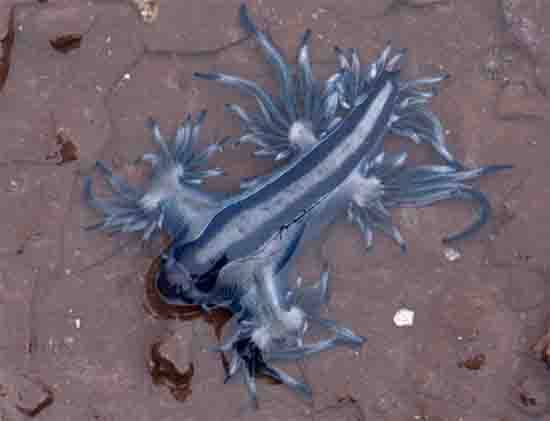
One of the most fascinating creatures associated with the Portuguese man o’ war is the blue sea dragon, scientifically known as Glaucus atlanticus. This small nudibranch, rarely exceeding a few centimeters in length, floats upside down on the ocean surface and displays an extraordinary blue and silver coloration.
Its branch-like appendages give it the appearance of a mythical miniature dragon, earning it one of the most memorable names in marine biology. Despite its elegant appearance, the blue sea dragon is a highly specialized predator with a unique diet centered around venomous siphonophores, including the Portuguese man o’ war.
This unusual sea slug demonstrates how marine species adapt in extraordinary ways to survive in challenging environments.
How the blue sea dragon uses stolen venom
The relationship between the blue sea dragon and the Portuguese man o’ war is one of nature’s most impressive examples of adaptation. Instead of being harmed by the venomous tentacles, the blue sea dragon consumes them selectively and stores the stinging cells inside specialized sacs within its body.
These stolen nematocysts remain functional and provide the blue sea dragon with an even stronger defensive weapon. Predators attempting to attack the sea slug may receive a painful surprise, making this tiny creature far more dangerous than its size suggests.
Scientists continue to study this remarkable process, which highlights the complex interactions between marine organisms and demonstrates the incredible evolutionary strategies found in ocean ecosystems.
Marine biodiversity beneath the waves
The connection between the Portuguese man o’ war and the blue sea dragon represents just one piece of the rich biodiversity found in Atlantic waters. Countless species depend on intricate food chains and ecological relationships that maintain balance within marine environments.
Predators, prey, and scavengers all contribute to healthy ecosystems. Even creatures that appear dangerous or intimidating serve essential functions. The Portuguese man o’ war helps regulate populations of small fish and plankton, while predators like the blue sea dragon participate in maintaining ecological stability.
Protecting marine habitats through conservation efforts, pollution reduction, and responsible tourism helps preserve these delicate relationships for future generations.
Appreciating ocean wonders responsibly
Encountering a Portuguese man o’ war on the beaches of Ribeira Grande can be both exciting and educational. These unusual creatures remind us that beauty and danger often coexist in nature. Likewise, the blue sea dragon demonstrates the astonishing ways life adapts beneath the ocean surface.
Whether observing marine life from a distance or learning about the fascinating creatures that inhabit Atlantic waters, respect and caution are essential. By appreciating these remarkable species responsibly, visitors and locals alike can deepen their understanding of the ocean while helping protect the extraordinary ecosystems that make Ribeira Grande such a captivating destination.
From the venomous Portuguese man o’ war to the enchanting blue sea dragon, the sea continues to reveal stories that inspire curiosity and remind us of the incredible diversity hidden beneath the waves.






Yorumlar
Kalan Karakter: