
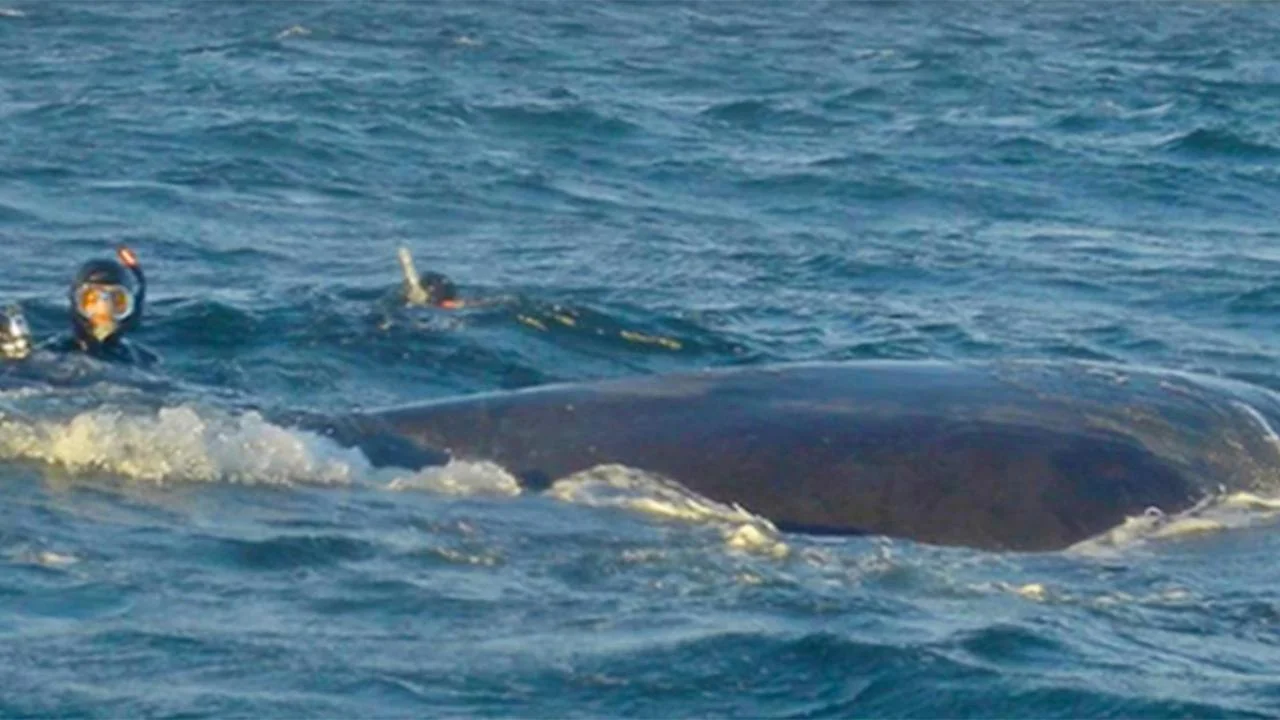
One such encounter occurred off the coast of San Francisco, where professional diver and marine volunteer James Moskito stumbled into a life-or-death situation involving a distressed humpback whale. What began as a routine survey near the Farallon Islands quickly turned into an unforgettable rescue mission that would later go viral across the world.

James had seen unpredictable ocean behavior before, yet nothing compared to the moment a whale looked directly at him, almost pleading for help. The rescue that followed required courage, skill, and unwavering determination from James and his team. What no one expected, however, was the whale’s astonishing display of gratitude after it was freed. This emotional moment, witnessed by the divers, became a powerful reminder of the deep intelligence and empathy found in marine life, making this one of the most inspiring ocean stories of recent years.
A whale behaving strangely raises immediate concern
While James and his volunteer team surveyed the area, he noticed a humpback whale lingering unusually long at the water’s surface. Most whales rise for air briefly before diving again, but this one stayed motionless, almost frozen in place. Such stillness is a troubling sign for a marine animal of this size and experience told James that something was seriously wrong.
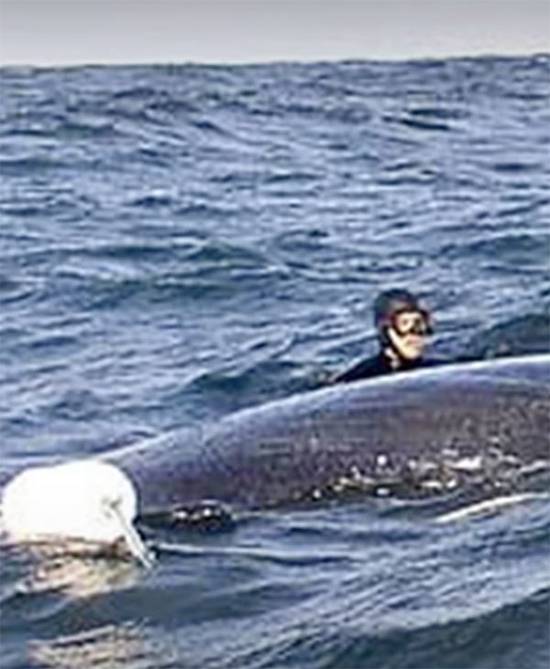
The whale then raised its eye above the surface, turning it directly toward him. The eye contact lasted long enough for James to feel a clear message: the whale needed help. This moment signaled the beginning of a rescue mission that would test every ounce of training and instinct James possessed.
The diver approaches and discovers a life-threatening trap
Despite the danger of approaching a wild whale, James trusted the calm energy radiating from the enormous creature. He swam toward it slowly, placing his hand gently over its eye and quietly assuring the whale that he was there to help. Moving around its massive body, he made a shocking discovery. A 3,000-pound anchor was attached to a mile-long chain wrapped tightly around the whale’s tail. The chain restricted its movement, dragged it downward, and drained its strength with every attempt to surface. Without immediate intervention, the whale would eventually drown because humpback whales must reach the surface to breathe. The rescue was no longer optional; it was urgent.
A grueling rescue mission in dangerous waters
James signaled the rest of the team, and together they formed a coordinated rescue plan. The divers used specialized tools to cut through the thick chain, working methodically to avoid injuring the whale or themselves. Every minute felt like a race against time as the cold water numbed their hands and their air tanks slowly depleted. The whale, astonishingly, remained calm throughout the entire operation, demonstrating a level of trust rarely seen in rescue situations. The divers pushed, pulled, and pried the heavy metal links apart, refusing to give up even as exhaustion set in. After hours of nonstop effort, the final piece of chain was finally removed.
The whale’s emotional reaction amazes the rescue team
Once freed, the whale did not swim away immediately as many expected. Instead, it hovered near the divers, circling James in slow, deliberate patterns. It moved in gentle figure-eights, a behavior often linked to curiosity and social interaction in marine mammals.
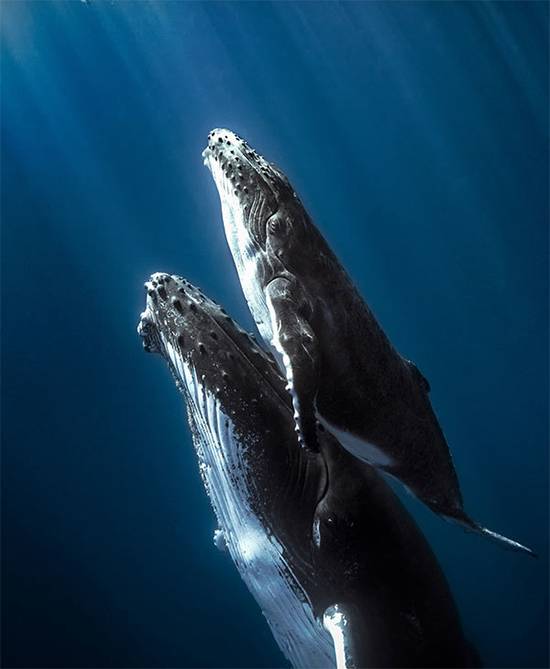
In one unforgettable moment, the whale rubbed its enormous body against James, much like a dog nudging its owner. Witnesses described the scene as deeply emotional, a silent exchange of gratitude between two beings who briefly shared a moment of understanding. The whale’s response became the most talked-about part of the rescue, captivating millions who later heard the story.
How whales rest and stay aware in the ocean
Many people wonder how whales can sleep without drowning, especially when they experience stress or exhaustion. Marine biologists explain that humpback whales rest by letting half of their brain sleep at a time. This allows them to maintain enough awareness to rise for air and remain alert to threats. This remarkable adaptation showcases the intelligence and biological sophistication of these gentle giants. It also highlights why entanglement can be so dangerous; even a brief disruption in their movement can quickly become life-threatening.
The emotional intelligence of whales continues to impress scientists
James speaking to the whale during the rescue may seem unusual, but scientific research supports the idea that whales have rich emotional lives. Studies from the Mount Sinai School of Medicine have revealed that whales possess spindle neurons, the same brain cells associated with empathy, emotion, and social connection in humans and primates. This discovery suggests that whales experience complex feelings and can recognize when another being is helping them. The whale’s calmness and affectionate behavior after the rescue reinforced the growing belief that these animals possess profound emotional awareness.
A rescue that reminds the world of compassion
This extraordinary rescue story spread far beyond the diving community and touched millions of people worldwide. In a world often filled with conflict and division, the moment between James and the humpback whale reminded us that compassion and connection are universal. James and his team did more than save a whale; they reignited hope and highlighted our shared responsibility to protect marine life. Stories like this inspire people to support ocean conservation, respect wildlife, and recognize the powerful bonds that can form between humans and animals. If this rescue moved you, consider sharing it, because the world can always use more reminders of what empathy looks like.







Yorumlar
Kalan Karakter: