

A small dimple, a change in nipple appearance, unexplained thickening, or persistent discomfort may be the first signs that something deserves attention. These changes are not automatically cancer, and most breast changes turn out to be benign. However, recognizing what is new or unusual for your body can help you seek timely medical advice.
For some patients, the earliest clue is not a lump at all. It may be a subtle indentation that catches the light when the arm is raised, or a section of skin that looks slightly puckered. These details can be easy to dismiss, especially when there is no pain. Yet healthcare professionals consistently emphasize that self-awareness is an important part of breast health. Knowing what is normal for you, and noticing when something changes, can lead to earlier evaluation and treatment when needed.
This article explains common early breast changes, when to contact a healthcare provider, and why regular screening remains essential. The goal is not to create fear, but to offer clear, compassionate information that empowers you to pay attention to your body and advocate for your health.
Understanding self-awareness versus self-diagnosis
Self-awareness means becoming familiar with the normal look and feel of your breasts. It does not mean trying to diagnose yourself. You are not expected to determine whether a change is cancer, a cyst, hormonal swelling, or another condition. That is the role of medical evaluation and, when appropriate, imaging or biopsy.
Healthy self-awareness involves noticing new or persistent changes and seeking medical advice when something feels different. It does not require constant checking, anxiety, or assuming the worst. Most breast changes are benign, but persistent or unusual changes deserve attention.
Recognizing early breast changes
A new lump or mass
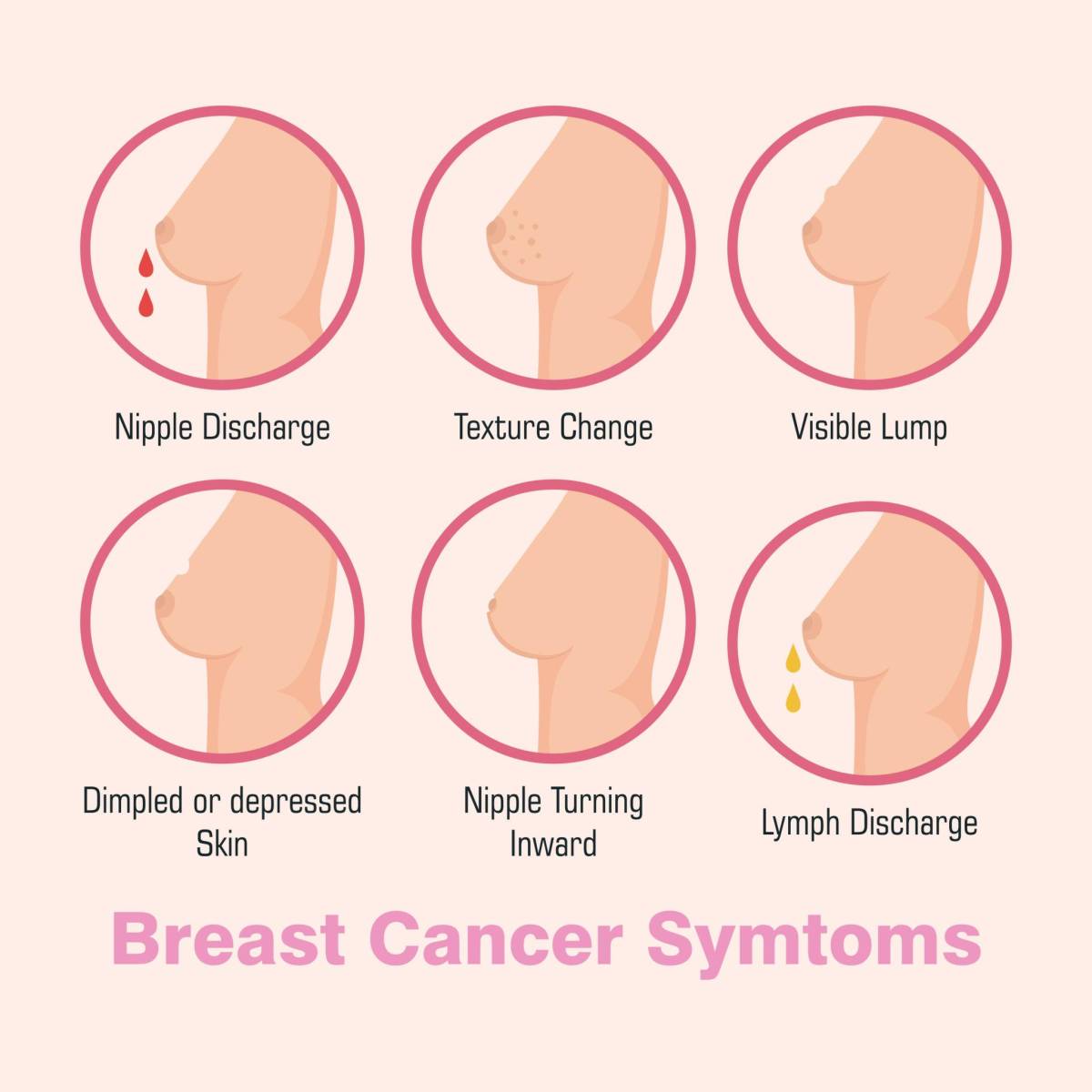
A new lump in the breast or underarm area is the most commonly recognized warning sign. Some cancerous lumps feel hard and irregular, but not all do. Benign cysts and fibroadenomas can also create lumps.
If you notice a new lump, especially one that does not disappear after your menstrual cycle, schedule an evaluation with a healthcare provider. Many lumps are not cancer, but they should still be assessed.
Skin dimpling or puckering
Skin dimpling may look like a small indentation or a texture resembling orange peel. This change can become more noticeable when raising the arm or leaning forward.
Dimpling can occur when underlying tissue pulls on the skin. Any new or unexplained puckering or dimpling should be evaluated by a healthcare professional.
Nipple changes
Important nipple changes include a newly inverted nipple, flattening, changes in position, or a rash and scaling on the nipple or areola. While benign skin conditions can affect the nipple, new or persistent changes warrant medical evaluation.
Nipple discharge
Discharge that occurs without squeezing, especially if it is bloody, clear, or coming from only one breast, should be assessed by a healthcare provider. Small amounts of milky discharge from both breasts when squeezed are often benign, but spontaneous one-sided discharge deserves attention.
Swelling, thickening, or heaviness
A portion of the breast may feel thicker, heavier, or firmer than surrounding tissue. Swelling that does not fluctuate with the menstrual cycle should be discussed with a healthcare professional.
Redness and warmth
Persistent redness, warmth, or inflammation can have several causes, including infection. In rare cases, inflammatory breast cancer can present with redness, swelling, and skin changes without a distinct lump. Persistent symptoms should be evaluated promptly.
Change in breast size or shape
Many people naturally have some breast asymmetry. However, a new or progressive change in size, contour, or shape should be assessed, particularly if it develops over weeks or months.
Persistent localized pain
Breast pain is common and is often related to hormonal changes. Pain that is persistent, localized to one specific area, and not clearly linked to the menstrual cycle should be discussed with a healthcare provider.
Why screening matters
Some early signs of breast cancer cannot be seen or felt. Mammograms can detect microcalcifications, architectural distortion, and other subtle abnormalities before symptoms appear. This is why regular screening remains a cornerstone of early detection.
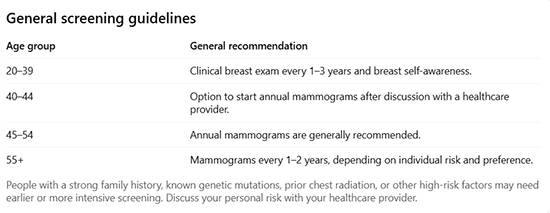
General screening guidelines
Seek medical advice if you notice:
- A new breast or underarm lump that persists.
- Skin dimpling, puckering, or orange-peel texture.
- Nipple inversion, flattening, crusting, or scaling.
- Spontaneous, bloody, clear, or one-sided nipple discharge.
- Persistent swelling, thickening, redness, or warmth.
- A noticeable change in breast size or shape.
- Persistent pain in one specific area.
- What usually does not require urgent evaluation
- Cyclical breast tenderness that comes and goes with your period.
- Generalized lumpiness that changes with your cycle.
- Small, tender lumps that appear before menstruation and disappear afterward.
When in doubt, ask. Healthcare providers would rather evaluate a benign change than miss an important one.
How to check your breasts thoughtfully
Formal monthly breast self-exams are no longer universally recommended as a screening tool because they have not been shown to reduce breast cancer mortality. However, breast self-awareness is still valuable.
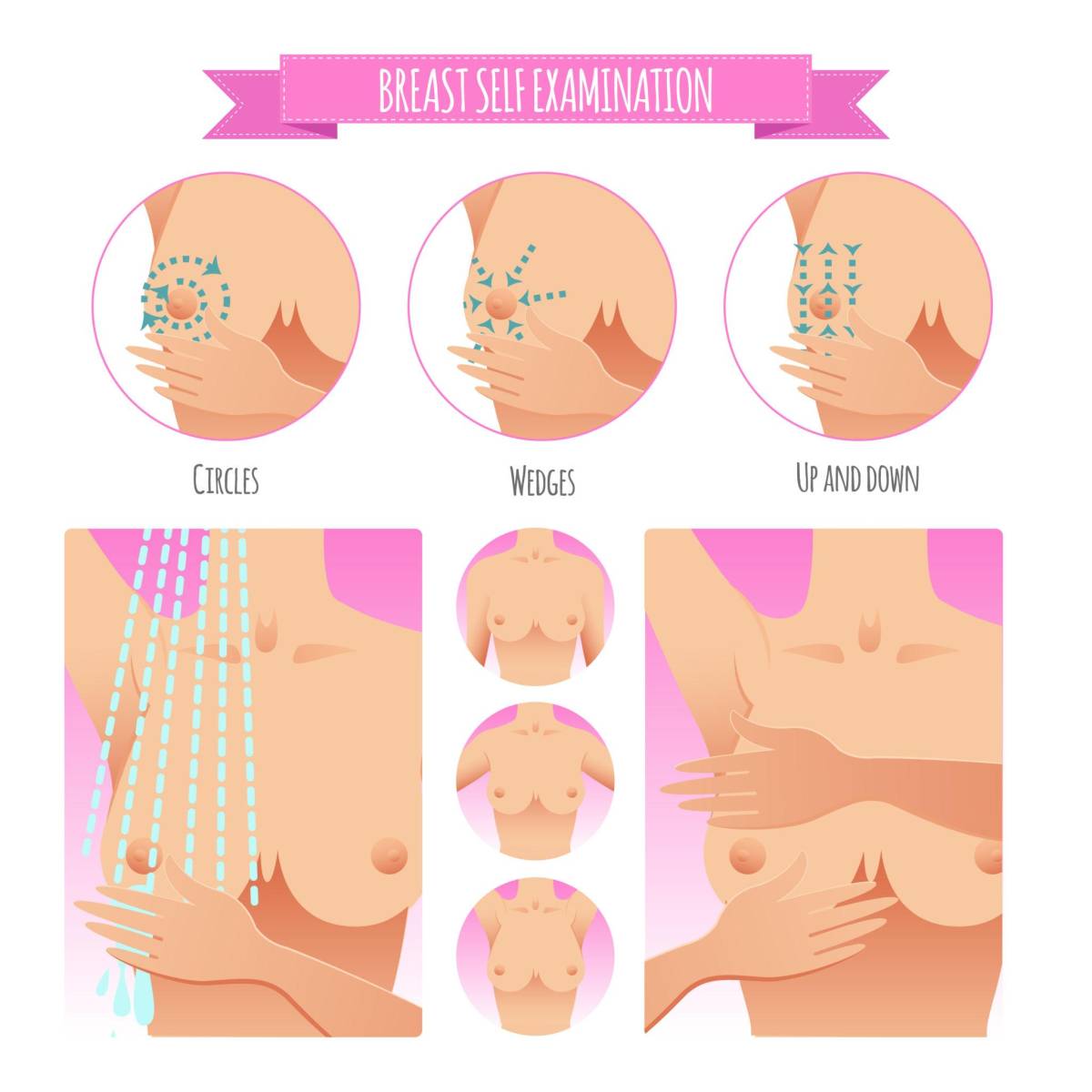
If you choose to examine your breasts, focus on becoming familiar with their normal appearance and texture. Look for changes in the mirror with your arms at your sides and raised overhead. Feel the breast tissue using the pads of your fingers, covering the entire breast and underarm area. The goal is not to find every small irregularity, but to notice what is new or different for you.
A note about dense breasts
Dense breast tissue is common and not a disease. It contains more glandular and connective tissue and less fat. Because both dense tissue and many tumors appear white on a mammogram, dense breasts can make mammograms harder to interpret.
If you have dense breasts, your radiologist or healthcare provider may discuss additional imaging such as ultrasound or MRI, depending on your overall risk profile.
Managing the fear of finding something
Discovering a breast change can be frightening. Many people worry about what a doctor might find and delay making an appointment. Yet uncertainty often creates more anxiety than evaluation. Most breast changes are not cancer, but if a problem is present, earlier detection generally offers more treatment options and better outcomes.
Paying attention to your body is not paranoia. It is an act of self-care. If something feels different, make the appointment, ask questions, and seek clarity.
Early breast changes are often subtle. A small dimple, a new lump, persistent swelling, nipple changes, or localized pain may be the body's way of signaling that something deserves attention. Most changes will not turn out to be cancer, but the ones that do are often most treatable when detected early.
Know what is normal for you. Notice what changes. And if something seems new, persistent, or unusual, talk with a healthcare professional. Listening to those early whispers can make a meaningful difference.
Medical note: This article is for educational purposes only and is not a substitute for professional medical advice, diagnosis, or treatment. If you notice concerning breast changes, consult a qualified healthcare provider.







Yorumlar
Kalan Karakter: