
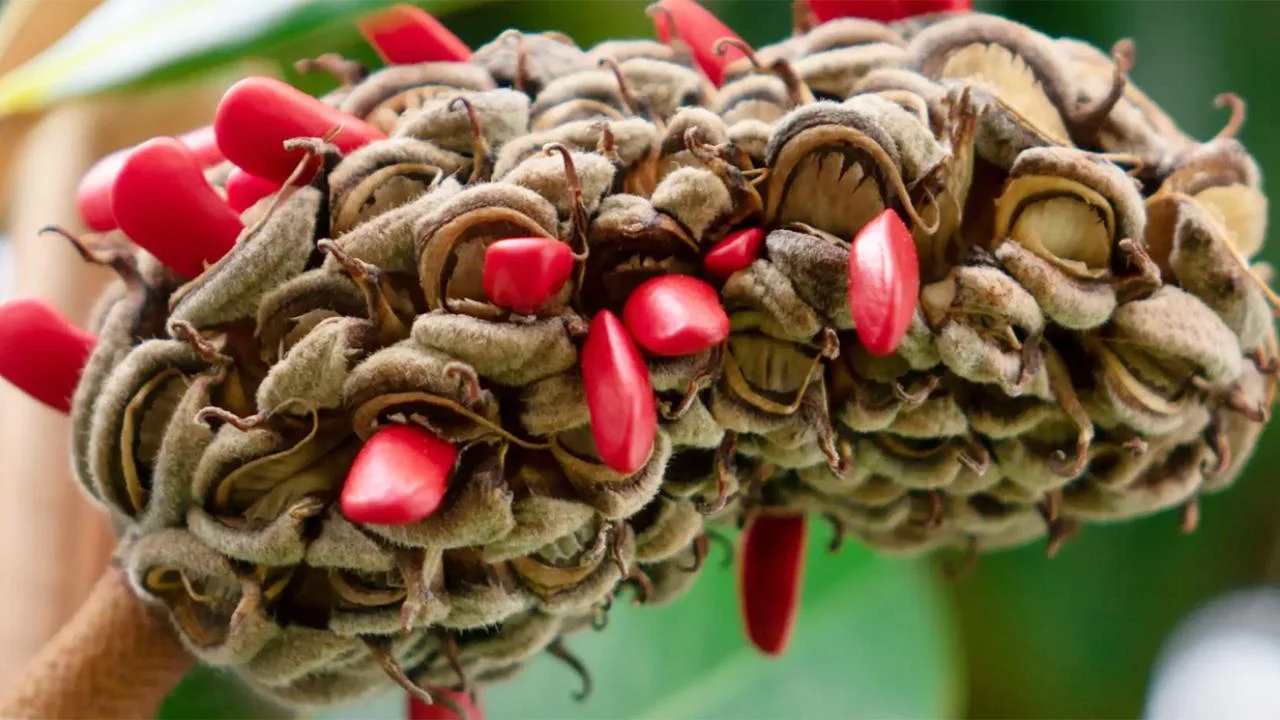
At first glance, it can look artificial or even a little unsettling, like something from a science fiction movie. Many people are surprised when they first encounter this unusual natural formation, often wondering if it is a fungus, an insect nest, or something entirely unfamiliar.
In reality, this fascinating object is a magnolia seed pod. While magnolia trees are widely admired for their large, elegant flowers, their seed pods are far less recognized yet equally intriguing. These unique structures play an important role in the tree’s reproduction and in supporting local wildlife. Understanding what they are and how they function can transform confusion into appreciation. This article explores the mystery behind magnolia seed pods, how to identify them, and why they are an essential part of nature.
Identifying magnolia seed pods in your yard
Magnolia seed pods are easy to recognize once you know what to look for. They typically appear as cone-shaped structures with a woody, brown exterior. The surface often has a slightly fuzzy or textured feel, especially when the pod is freshly fallen from the tree.
As the pod matures, it begins to split open, revealing bright red seeds that emerge from within. These seeds are glossy and bead-like, creating a striking contrast against the earthy brown cone. This unique appearance is what often catches people off guard and sparks curiosity.
You will most commonly find these pods beneath magnolia trees in late summer or early autumn. If you live in regions where magnolia trees are common, such as the southeastern United States, spotting these pods in your yard becomes much more likely during this time of year.
Understanding why magnolia seeds are bright red
The vivid red color of magnolia seeds is not random. It serves a very specific purpose in the natural world. These seeds are coated in a fleshy outer layer designed to attract birds and small animals.
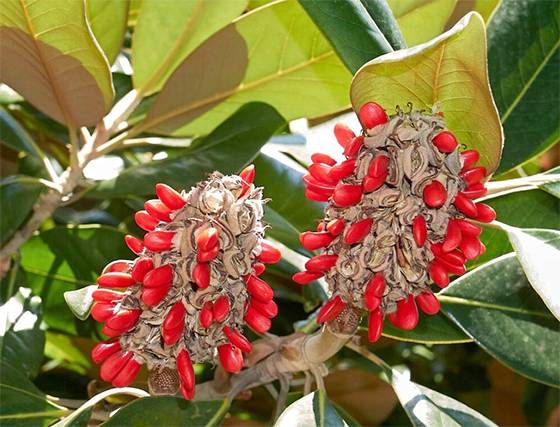
Bright colors, especially red, act as visual signals to wildlife. Birds are naturally drawn to these colors, making it easier for them to locate the seeds among fallen leaves and branches. Once consumed, the seeds pass through the digestive system and are later dispersed in new locations.
This process, known as seed dispersal, helps magnolia trees reproduce and spread naturally. Without this system, it would be much harder for new trees to grow away from the parent plant. The striking appearance of the seeds is actually part of a highly effective ecological strategy.
Exploring the life cycle of a magnolia tree
To fully understand magnolia seed pods, it helps to look at the tree’s life cycle. Magnolia trees begin their annual cycle with large, fragrant flowers that bloom in spring. These blossoms are often white, pink, or cream-colored and are one of the tree’s most recognizable features.
After the flowers fade and fall, the base of each bloom remains attached to the tree. Over time, this base develops into a seed pod. Throughout the summer, the pod grows and gradually hardens into its familiar cone-like shape.
By late summer or early fall, the pod reaches maturity. At this stage, it begins to split open, revealing the red seeds inside. Eventually, the seeds fall or are carried away by animals, continuing the cycle of growth and reproduction.
Knowing whether magnolia seeds are safe
A common question people ask when they find magnolia seed pods is whether the seeds are safe to touch or consume. The good news is that they are safe to handle and pose no danger through casual contact.
However, magnolia seeds are not intended for human consumption. While they are not considered highly toxic, eating them may lead to mild digestive discomfort. For this reason, it is best to avoid ingesting them.
For pets, occasional contact is generally not harmful, but it is still wise to discourage animals from eating unfamiliar plant materials. As with many natural substances, moderation and caution are key.
Using magnolia pods for decoration and crafts
Interestingly, magnolia seed pods are not just a natural curiosity. Many people collect them for decorative purposes due to their unique appearance and texture. Once dried, the pods become more rigid and durable, making them suitable for various creative uses.
They are often included in seasonal decorations, wreaths, or natural centerpieces. Their earthy tones and unusual shape add visual interest to arrangements, especially during autumn. Some craft enthusiasts even use them in DIY projects or as part of rustic home décor. If you plan to collect magnolia pods, simply allow them to dry fully before using them. This helps preserve their structure and prevents mold or decay.
Appreciating nature’s hidden designs
What may initially seem strange or even unnatural is often a perfect example of how nature works in subtle and efficient ways. Magnolia seed pods demonstrate how plants have evolved to ensure survival through clever design and interaction with wildlife.
From their textured exterior to their bright, attention-grabbing seeds, every part of the pod serves a purpose. These small details often go unnoticed, yet they play a crucial role in maintaining ecosystems.
The next time you come across one of these unusual cones in your yard, you will know that it is not something mysterious or artificial. Instead, it is a natural and essential part of a magnolia tree’s life cycle, quietly contributing to the environment in a remarkable way.




Yorumlar
Kalan Karakter: