
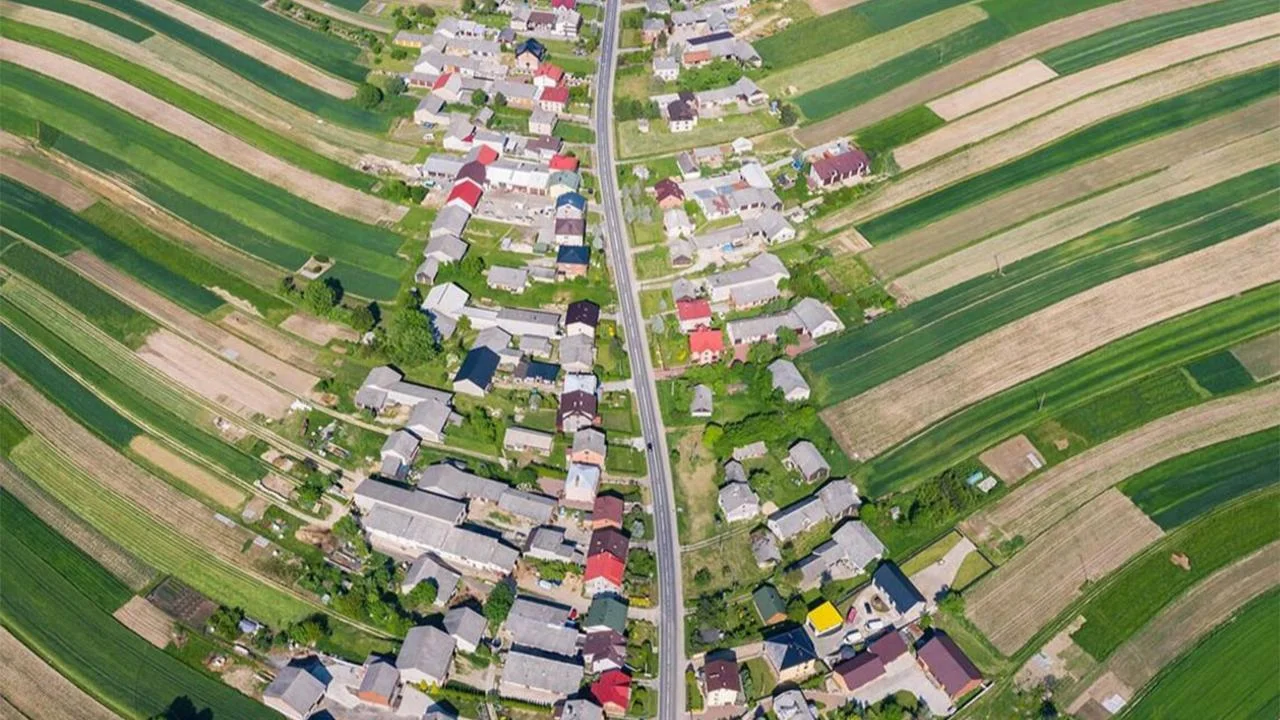
Nestled in southern Poland, this extraordinary settlement has gained international fame for an unusual reason: nearly all 6,000 of its residents live along a single, continuous street that stretches more than nine kilometers. At first glance, Sułoszowa’s layout seems almost surreal, especially from above, where homes and farmland form a ribbon-like pattern across the landscape.
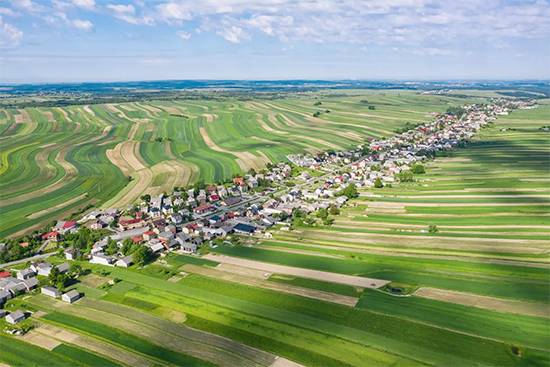
Yet the fascination goes far beyond aerial photography. Sułoszowa represents a living example of how geography, agriculture, and tradition can shape social bonds. With neighbors living side by side along one road, daily life naturally encourages interaction, cooperation, and shared identity. This article explores the origins, structure, lifestyle, and global appeal of Poland’s remarkable “One-Street Town,” revealing why Sułoszowa continues to captivate travelers, geographers, and community enthusiasts alike.
The origins of Sułoszowa’s unique layout
Sułoszowa’s distinctive design is not a modern novelty but the result of historical agricultural planning. The village developed under a medieval land distribution system commonly used in parts of Central and Eastern Europe. Known as the “strip farming” model, this method allocated long, narrow plots of land to families, ensuring each household had equal access to fertile soil and road frontage.
Homes were built at the front of each strip, directly facing the main road, while farmland extended behind them in elongated parcels. Over centuries, this arrangement remained intact, preserving the settlement’s linear form. Unlike towns that expanded outward into grids or clusters, Sułoszowa simply extended along its central artery.
This historical planning system not only maximized land efficiency but also created the foundation for the village’s modern identity. Today, the same agricultural strips visible generations ago can still be seen clearly on satellite maps.
Aerial views that captured the world’s attention
Sułoszowa’s global recognition surged with the rise of satellite imaging and drone photography. From above, the village appears almost geometric in precision. Rows of houses line the road, while alternating green and brown fields stretch backward like stripes on a barcode.
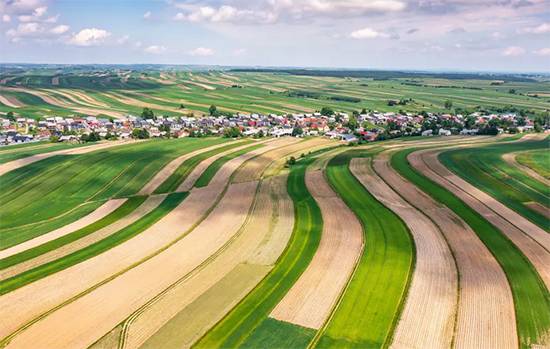
These mesmerizing visuals have circulated widely on social media, travel blogs, and geography publications. Many viewers initially assume the images are digitally altered due to their symmetry and scale. However, the layout is entirely authentic.
The aerial perspective highlights how human settlement and farmland coexist in perfect alignment. It also underscores how traditional agricultural systems can produce landscapes that are both functional and visually stunning. As a result, Sułoszowa has become a popular subject for geographic studies and travel curiosity lists.
Daily life along a single street
Living on one street shapes everyday routines in subtle but meaningful ways. Residents often describe a heightened sense of familiarity and accessibility. Neighbors pass each other frequently, whether walking, cycling, or driving along the main road.
Local services, churches, shops, and community centers are all positioned along this same route, making them easy to reach. Children travel the same road to school, and community events often revolve around shared public spaces nearby.
This linear arrangement fosters spontaneous interaction. Casual greetings, quick conversations, and mutual assistance become part of daily rhythm. Many locals believe this proximity strengthens trust and reinforces communal responsibility.
Despite its small-town intimacy, Sułoszowa is not isolated. Modern infrastructure, internet connectivity, and regional transport links allow residents to balance rural tranquility with access to urban opportunities.
Agriculture and land use traditions
Farming remains central to Sułoszowa’s identity. The narrow land strips behind each home are actively cultivated, producing crops such as grains, potatoes, and vegetables. This close integration of residence and farmland allows families to manage agricultural work efficiently.
The strip system also promotes biodiversity. Different crops across adjacent plots create a patchwork of textures and colors throughout the growing season. This diversity contributes to the village’s striking aerial appearance while supporting soil health.
Mechanization has modernized some farming practices, but many families still maintain traditional methods passed down through generations. Seasonal cycles, harvest rituals, and shared labor continue to shape the social calendar. Agriculture here is not just an economic activity but a cultural anchor that connects residents to their land and heritage.
Community bonds and cultural identity
One of Sułoszowa’s most celebrated qualities is its strong sense of community. Living along a single street naturally encourages collective identity. Residents often participate in shared festivals, religious celebrations, and local initiatives.
Weddings, harvest festivals, and national holidays bring villagers together, reinforcing social cohesion. Oral histories and family legacies are widely preserved, with many households tracing their roots in the area back centuries.
This closeness also translates into mutual support. Neighbors frequently assist one another with farming tasks, home repairs, or emergencies. Such cooperation reflects a lifestyle where interdependence remains valued. In contrast to anonymous urban living, Sułoszowa offers a model of community where relationships are visible, immediate, and enduring.
Tourism and global curiosity
Although small, Sułoszowa has become a destination for curious travelers, photographers, and cultural explorers. Visitors are drawn by its reputation as one of the world’s most unusual village layouts.
Tourism remains modest and respectful, focusing on sightseeing, local history, and regional cuisine rather than mass commercialization. Nearby natural attractions, including the Ojców National Park, further enhance the area’s appeal.
For many visitors, the experience is less about landmarks and more about atmosphere. Walking the length of the village offers insight into a slower, more connected way of life rarely seen in modern settlements. The village’s growing online visibility continues to boost interest while local authorities work to preserve its authenticity.
Why Sułoszowa matters in a modern world
Sułoszowa stands as more than a geographic curiosity. It represents an alternative perspective on urban planning, land distribution, and social cohesion. In a time when cities struggle with congestion and disconnection, the village illustrates how physical layout can influence human relationships.
Its single-street structure simplifies navigation, encourages interaction, and maintains a strong link between home and livelihood. While such a model may not scale to metropolitan populations, it offers valuable lessons in community design.
Urban planners, sociologists, and sustainability advocates increasingly study settlements like Sułoszowa for inspiration. The balance between efficiency, agriculture, and social unity provides insights relevant far beyond rural Poland.
Sułoszowa’s story is a reminder that extraordinary places do not always rely on skyscrapers or vast populations. Sometimes, a single road can hold an entire community together. With its 9-kilometer main street, historic strip farms, and deeply rooted traditions, this Polish village continues to captivate the world.
From stunning satellite imagery to heartfelt neighborly bonds, Sułoszowa demonstrates how geography shapes culture and connection. In its simplicity lies its brilliance, proving that one street, when shared by thousands, can become the backbone of an enduring and remarkable way of life.







Yorumlar
Kalan Karakter: