
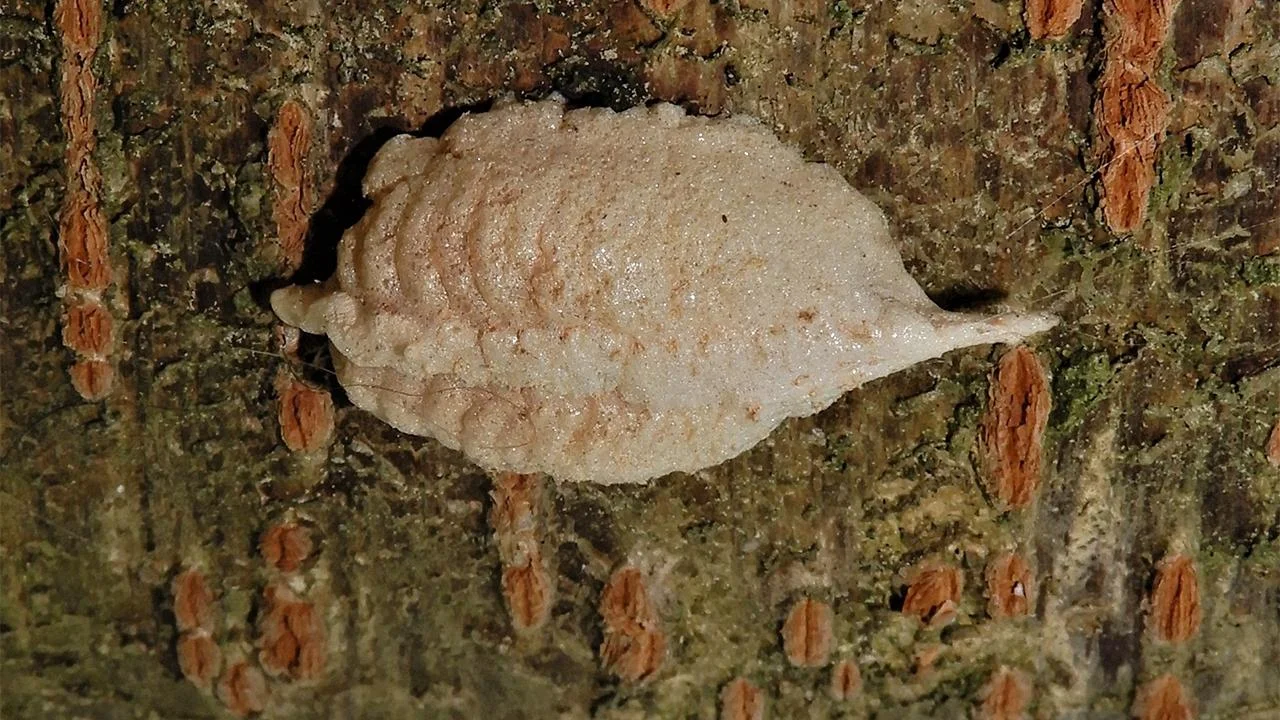
Backyard mystery
It is brown, foam-like, and hardened into an oblong shape with subtle ridges. At first glance, it may look artificial or even invasive, triggering the urge to scrape it away. Yet this mysterious structure is not a threat. It is an ootheca, the egg case of a praying mantis, quietly sheltering the next generation of one of nature’s most efficient garden predators.
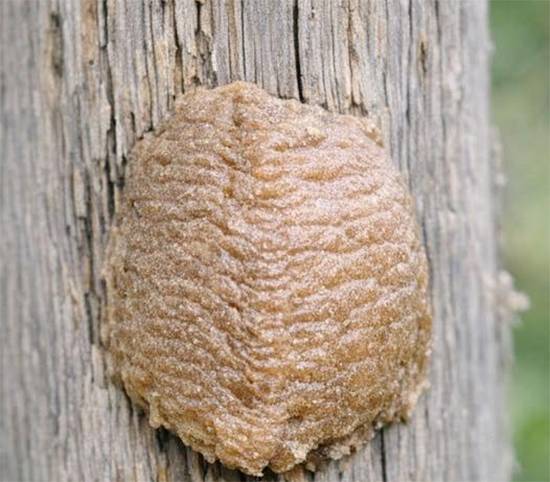
Understanding what you are seeing transforms uncertainty into fascination. Inside that compact, foam-textured casing, dozens or even hundreds of mantis eggs are protected from winter’s harsh conditions. As temperatures rise in spring, these eggs will hatch into tiny hunters that help regulate insect populations naturally. What appears strange at first is actually a remarkable survival system and a sign of ecological balance in your yard.
Identifying a praying mantis egg case
A praying mantis egg case, commonly called an ootheca, has a distinctive appearance once you know what to look for. Typically measuring 1 to 2 inches long and about half an inch wide, it is tan to light brown and firmly attached to solid surfaces. Fence posts, garden tools, shrubs, and twigs are all common locations.
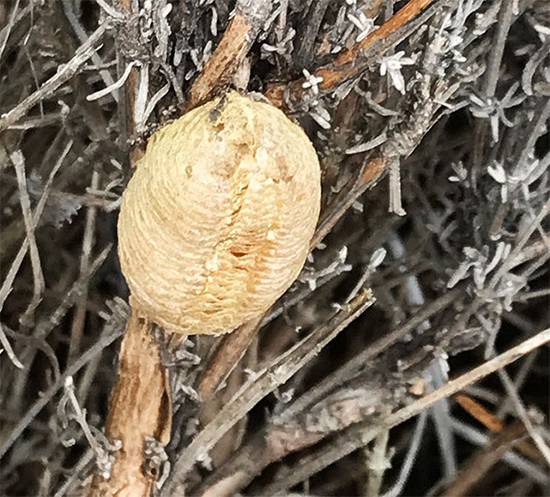
Its texture resembles hardened expanding foam. The surface is ridged and slightly spongy but tough enough to resist weather damage. Unlike wasp nests, it has no visible open cells. Unlike fungal growth, it feels dry and structured rather than soft or organic.
Recognizing these characteristics helps homeowners avoid destroying beneficial insect life. Searching images of “praying mantis egg case identification” or “ootheca on fence post” will quickly confirm the match.
Understanding how the ootheca forms
The creation of an ootheca is a feat of biological engineering. After mating in late summer or autumn, the female praying mantis secretes a frothy, protein-rich substance around her eggs. This foam expands as it is deposited, encasing the eggs in protective layers.
Within hours, the foam hardens into a durable shell. The casing is lightweight yet resilient, designed to endure freezing temperatures, wind, and predators. Inside, the eggs are arranged in orderly rows within insulated chambers.
This structure regulates moisture and temperature while shielding embryos from parasitic insects. The female’s instinctive design ensures that at least a portion of her offspring will survive until spring.
Exploring the role of mantises in garden ecosystems
Praying mantises are ambush predators belonging to the order Mantodea. Their elongated bodies and folded forelegs allow them to remain motionless before striking prey with lightning speed.
They feed on flies, moths, beetles, crickets, caterpillars, and aphids. Many of these insects are considered agricultural or garden pests. Because of this, mantises are widely valued in organic gardening and natural pest control strategies.
While they are generalist predators and may consume beneficial insects as well, their presence still contributes to ecological balance. Searching terms like “benefits of praying mantis in the garden” highlights their importance in reducing reliance on chemical pesticides.
Witnessing the spring hatching event
When consistent warmth arrives, the ootheca opens in a remarkable display of life. A seam forms along the casing, and tiny mantises begin emerging in waves.
Newly hatched mantises are pale, threadlike, and delicate in appearance. Within hours, they darken and harden as their exoskeletons develop. Despite their miniature size, they are fully capable hunters from birth. They disperse quickly into surrounding vegetation, where they begin feeding immediately. Observing this emergence is a rare backyard wildlife event and offers insight into insect life cycles.
Learning why the egg case is harmless
A mantis egg case poses no danger to humans or pets. It does not sting, bite, or spread disease. Its hardened foam exterior simply protects dormant eggs.
For homeowners, its presence is beneficial rather than threatening. Each case represents a future population of natural predators ready to manage pest insects. Gardeners who prioritize sustainability often welcome oothecae as signs of a healthy environment. Leaving the case undisturbed supports biodiversity and reduces the need for chemical pest treatments.
Relocating an egg case safely
Sometimes an ootheca is placed in an inconvenient or high-traffic area. In such cases, relocation is possible if done carefully. Instead of scraping it off, cut the small branch or twig to which it is attached. Secure the piece upright in a shrub, hedge, or sheltered garden corner using soft ties or twine. Maintaining the original orientation improves hatching success. Avoid placing it indoors or in sealed containers, as natural temperature cycles are necessary for development.
Avoiding common misidentifications
Mantis egg cases are often confused with other natural formations. Paper wasp nests have visible hexagonal cells and a papery texture. Mud dauber nests are tubular and made of dried mud. Fungal growths tend to be softer and irregular.
An ootheca remains distinct with its foam-like ridges, elongated form, and firm attachment. Learning these differences prevents accidental removal of beneficial insects.
Appreciating a living science lesson
Discovering a praying mantis egg case can transform an ordinary backyard into a living classroom. Children and adults alike can observe seasonal change, insect development, and predator-prey relationships firsthand.
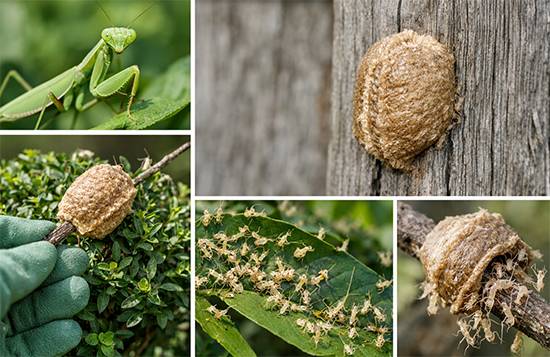
Watching an ootheca through winter and anticipating its spring hatching fosters curiosity and respect for small ecosystems. In a time when chemical pest control dominates many landscapes, this natural nursery represents nature’s self-regulating design.
Protecting it means supporting biodiversity, encouraging sustainable gardening, and witnessing one of the quietest yet most fascinating life cycles unfolding just beyond your door.






Yorumlar
Kalan Karakter: