
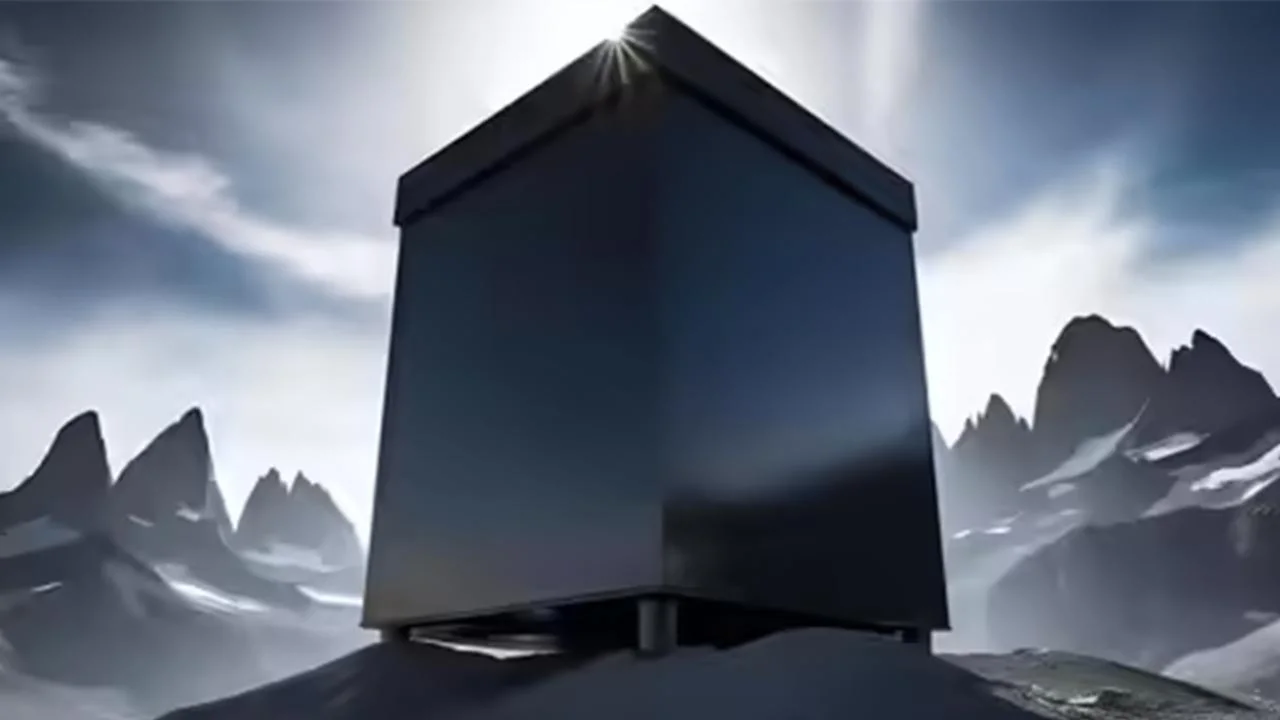
In one of the most symbolic and thought-provoking initiatives yet, Australia has begun constructing Earth’s first climate “black box” — a steel monolith designed to record environmental data and humanity’s response to global warming. Built in remote Tasmania, this structure will function much like an aircraft flight recorder, preserving critical information about rising global temperatures, carbon emissions, melting ice sheets, and sea level rise. The project is both a scientific archive and a moral statement, intended to hold world leaders and societies accountable while warning future generations about the consequences of environmental inaction. As climate instability intensifies — illustrated by events such as the movement of Antarctica’s massive A23a iceberg — the black box stands as a stark reminder that time to act is rapidly running out.
What is earth’s climate black box?
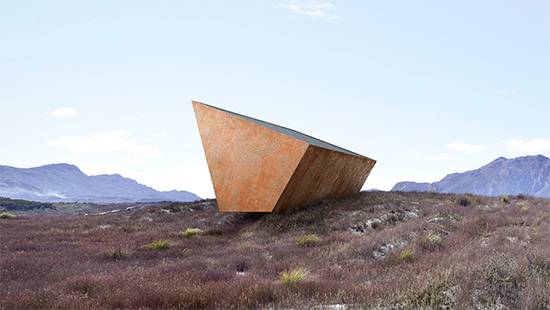
The device will continuously collect and store vast amounts of climate data. This includes global temperature trends, atmospheric carbon dioxide levels, ocean acidification metrics, biodiversity loss statistics, and energy consumption patterns. It will also track policy decisions, international climate agreements, and environmental pledges made by governments and corporations. By combining environmental science with geopolitical data, the black box aims to create a comprehensive timeline of how humanity responded to the climate emergency.
How the climate recorder works
The climate black box operates through an array of satellite feeds, remote sensors, and internet-linked databases. Solar panels power the system, ensuring long-term sustainability even if global infrastructure weakens.
Data will be stored on durable, high-density storage drives designed to last centuries. Engineers are using materials resistant to corrosion, extreme heat, and seismic activity to safeguard the archive.
If civilization faces severe collapse or environmental catastrophe, the recorder would remain as a preserved record — accessible to future survivors or even distant generations seeking to understand what happened. In essence, it is both a time capsule and a scientific ledger of planetary change.
Why tasmania was chosen
Tasmania offers a unique blend of geological and political stability, making it an ideal site for long-term data preservation. The island sits outside major geopolitical conflict zones and is less vulnerable to extreme temperature fluctuations than continental regions.
Its rugged west coast provides solid bedrock foundations and relative isolation from urban development. This reduces risks from vandalism, industrial interference, or infrastructure decay. Additionally, Australia’s strong research institutions and climate science programs provide logistical and academic support for maintaining the project over time.
Holding humanity accountable
One of the most powerful aspects of the climate black box is its ethical purpose. Beyond raw data, it will document climate decision-making — including delayed policies, missed emissions targets, and environmental rollbacks.
By preserving this record, the project symbolically ensures that responsibility for climate outcomes cannot be erased or rewritten. Future generations will be able to see not only what happened to the planet but also how leaders, industries, and societies responded. Researchers hope this accountability element will pressure governments and corporations to accelerate climate action today, rather than risk historical condemnation tomorrow.
Climate warning signs driving the project
The construction of Earth’s black box comes amid intensifying climate warning signals. Scientists continue to report record-breaking global temperatures, accelerating glacier melt, and increasing frequency of extreme weather events.
One striking example is Iceberg A23a — one of the largest icebergs ever recorded. After breaking away from Antarctica’s Filchner Ice Shelf in 1986, it remained grounded for decades before recently drifting into the Southern Ocean near South Georgia Island.
Its movement highlights shifting ocean currents and warming waters that destabilize polar ice. Such events contribute to rising sea levels, which threaten coastal cities worldwide. Researchers warn that if current warming trends continue, many low-lying regions could face chronic flooding or submersion by 2100.
The technology preserving future history
To ensure longevity, engineers are designing the black box with redundancy systems and layered data storage. Multiple recording units will back up identical information, reducing the risk of total data loss. The structure itself is being built from thick steel panels anchored to bedrock, capable of withstanding cyclones, fires, and seismic shocks.
Advanced encryption and formatting methods are also being considered so that future civilizations — even with different technologies — could decode the stored information. This fusion of climate science, engineering, and archival design transforms the project into one of the most ambitious environmental documentation efforts ever attempted.
Global impact and public reaction
Public response to the climate black box has been a mix of fascination, urgency, and reflection. For some, the project feels dystopian — a monument built in anticipation of catastrophe. For others, it is a necessary wake-up call. Climate advocates see it as a powerful communication tool, translating abstract climate data into a tangible symbol of planetary risk.
Educational institutions and environmental organizations are already exploring ways to integrate the project into climate awareness campaigns, sustainability curricula, and policy discussions. By making the crisis visible and permanent, the black box may help bridge the gap between scientific warnings and public engagement.
A stark symbol of the climate clock
Ultimately, Earth’s climate black box is more than a recording device — it is a message cast in steel. It declares that humanity is living through a defining geological and moral moment.
As emissions rise, ice melts, and seas expand, the recorder will silently log each development. Whether it becomes a chronicle of failure or a record of redemption depends on actions taken today.
The monolith in Tasmania stands watch not just over data, but over humanity’s choices — reminding the world that the climate clock is ticking, and history is being written in real time.







Yorumlar
Kalan Karakter: