
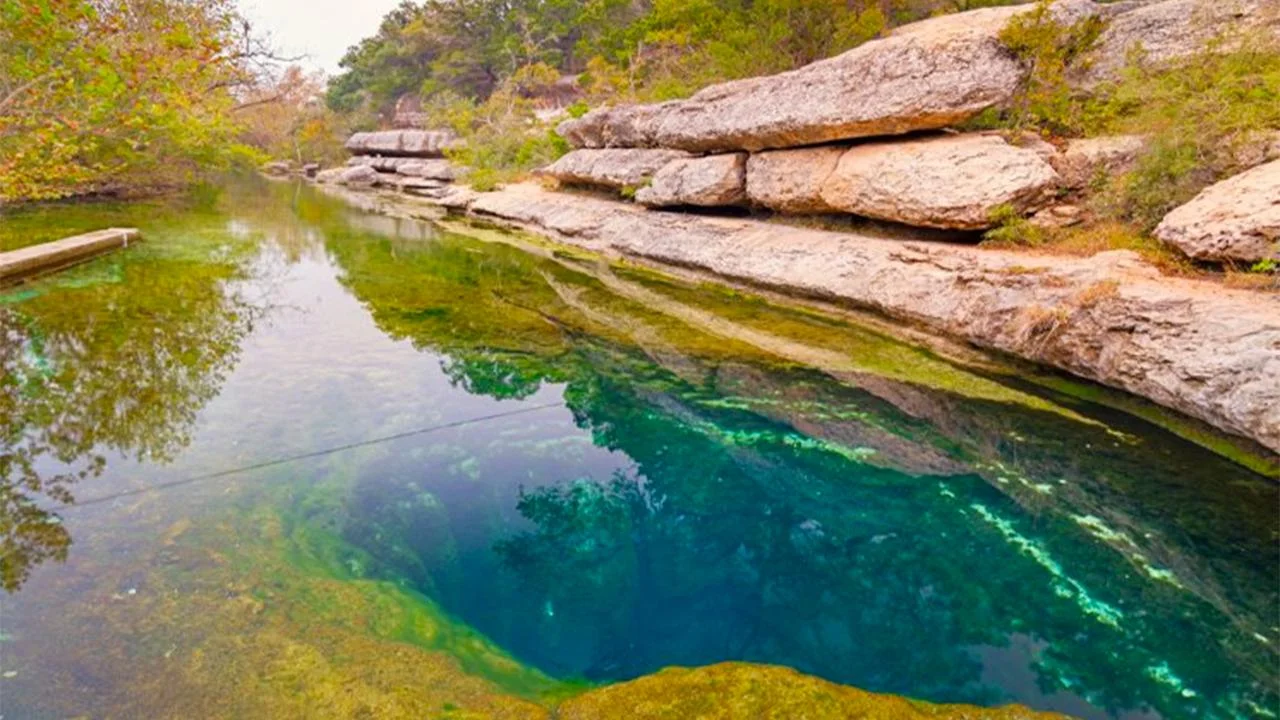
Central Texas summers can feel inhospitable, pushing temperatures beyond comfort. To cool off, most reach for shade or icy drinks, but others trek toward a limestone portal that appears more mythical than real. Jacob’s Well is a 12-foot-wide spring that spills into an enormous, twisting underwater cave network fed by the Trinity Aquifer. Its striking clarity gives way to hidden constrictions and blinding silt traps below.
Over the decades, its name became synonymous with beauty, danger, faith-linked symbolism, and real tragedy. From early settlers powering mills to modern free-divers exploring suffocating tunnels, this spring compels fascination. This article plunges into its formation, its biblical namesake, deadly challenges of diving the caves, cultural allure, conservation battles, and crucial safety guidelines. Whether you’re curious about karst springs, cave diving hazards, or legendary Texas swimming holes, Jacob’s Well is a story that lingers long after the splash stops.
About Jacob’s Well
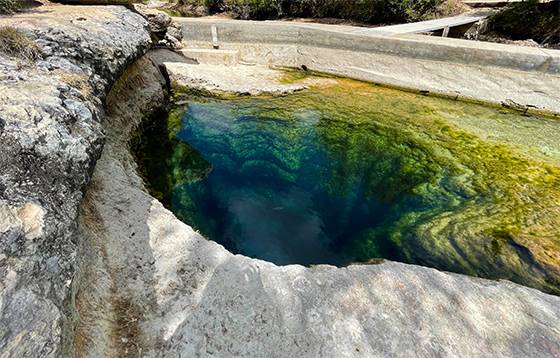
Jacob’s Well sits in Wimberley, Texas within a protected natural area managed by Hays County Parks Department. Scientifically classified as a perennial karst spring, its opening measures roughly 12 feet across, carved into ancient limestone and layered bedrock. The water source is the vast Trinity Aquifer, one of Texas’s most productive artesian groundwater systems, supporting municipal use, agriculture, ecosystems, and recreation across the southwestern region. Though early settlers reported flows erupting nearly 5 feet above the opening, modern discharge is significantly lower, now feeding Cypress Creek with surface ripples rather than a dramatic fountain.
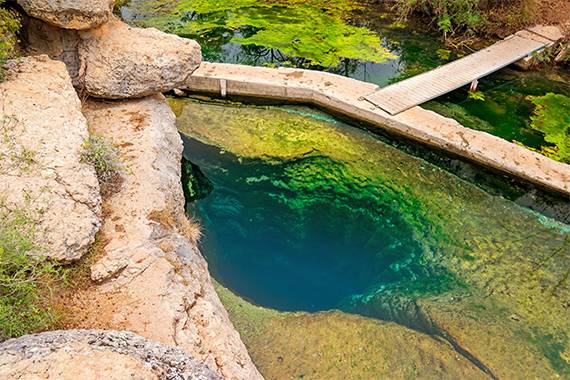
The spring is located on approximately 80 acres of conserved land, preserved for ecological stability, groundwater recharge protection, and carefully regulated tourism. Exploration through conservative mapping projects has surpassed 4,500 feet of surveyed submerged passageways, making it one of the most fascinating cave networks in Texas. It is often mentioned as the second-largest fully submerged cave system in the state. Despite its relatively small surface diameter, the cavern below sprawls into a labyrinth of siphon-fed conduits, chambers, choke points, and long tunnels. The spring’s karstic nature means it was created by continuous rock dissolution—a slow geologic process where water absorbs carbon dioxide from soil to form weak carbonic acid, dissolving limestone over thousands of years.
Visitors today often view Jacob’s Well as a natural pool, cliff-jumping stage, and photographic landmark. Yet what looks like a neat circular swimming hole drops vertically into darkness, splitting into tight side passages, some demanding removal of breathing equipment to traverse. While recreational scuba diving is not allowed, skilled free-divers sometimes descend far into the caves, navigating blind restrictions where currents can reverse and silty sediment can erase visibility instantly.
Biblical name and cultural origins
The naming of Jacob’s Well traces back to mid-19th century settlers inspired by biblical imagery and the perceived “sacred scale” of the pristine spring. The name evokes Jacob's Well, West Bank, a location tied to Old Testament symbolism, purity, and divine provision. To the settlers, the Texas spring carried an uncannily spiritual resemblance—a life-sustaining oasis amid harsh summer land, enigmatic in its depth and seemingly boundless in supply. The settlers’ reverence turned practical when they used the spring to supply drinking water and later harnessed its flow for industrial tasks including powering a sawmill, strengthening its reputation as a miracle-like resource.
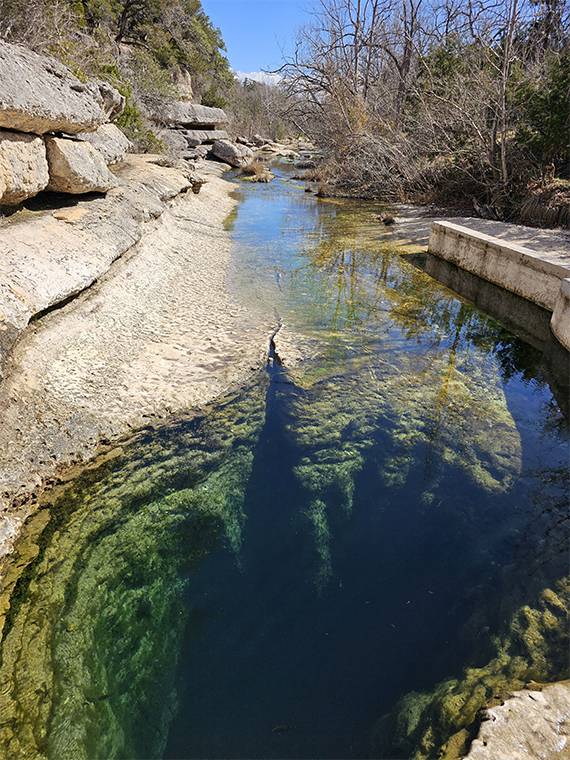
Over time, Jacob’s Well grew into a cultural emblem of the Texas Hill Country. Families, divers, ecologists, photographers, and storytellers built layers of meaning around it. It became a rite-of-passage destination for cliff-jumping teens, an object of awe for spiritual seekers exploring “biblical parallels in nature,” and an obsession for hydro-geologists studying groundwater behavior. The name stuck because it blended narrative magnetism, religious grandeur, and accurate regional memory. Local traditions regard the spring as a bridge between ancient mystique and rugged American frontier history. This fusion of science, survival, and spirituality kept the site embedded in regional folklore.
Jacob’s Well has inspired artistic metaphors in storytelling, symbolizing a gateway, a baptismal mirror, a river root, or an abyssal trial. Its symbolism often appears in Texas travel blogs, adventure documentaries, environmental campaigns, and local museum exhibits emphasizing pioneer ingenuity. The spring’s biblical tie gives it a timeless identity that separates it from ordinary swimming holes. People connect the name to ideas of mystery, life, and unseen danger—a perfect encapsulation of what lies beneath the surface.
Karst formation and hidden cave architecture
Jacob’s Well is a classic karst window leading into a massive dystrophy of dissolved limestone, fractured voids, and water-carved conduits. It belongs geologically to the Balcones Fault Zone, where uplift, tectonic stress, and limestone solubility converge to create springs and caves. When rainwater filters through soil above, it absorbs CO₂, forming acidic water that slowly dissolves rock, producing enlarged fractures that eventually evolve into collapsible cavities and underwater channels. These are often referred to by speleologists as submerged phreatic zones.
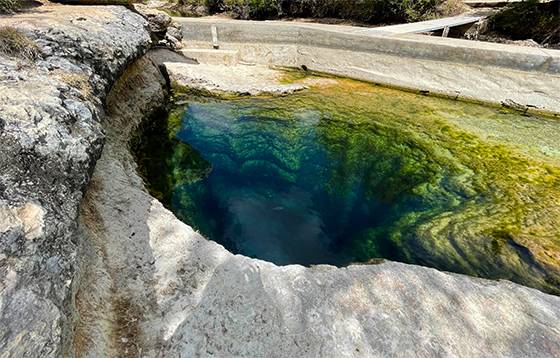
Below Jacob’s Well’s surface lies a vertical shaft descending roughly 30 feet before reaching the first major chamber. From there, the cave branches into restrictive tunnels and long siphons. Some passages pinch down to diameters narrower than 3 feet. The most notorious region, “the Restriction,” forces divers to contort sideways to enter. Sediment layers here are extremely fine. Any disturbance triggers silt-out conditions, eliminating light penetration even for divers carrying high-lumens torches.
The cave’s architecture also features depth gradients that influence gas narcosis, pressure impact, disorientation, and physical entanglement risk. Most branching conduits are not linear; they bend sharply, slope downward, or reverse, creating a challenging environment that traps bubbles, reflects sound poorly, and scrambles spatial awareness. While parts of the cave carry active flow, these currents are inconsistent. In drought conditions flow weakens, but after heavy rain, surges can pulse violently inward or outward. This unpredictable current behavior combined with narrow cave throats makes navigation hazardous.
Cave divers compare Jacob’s Well to a natural sensory deprivation chamber—it is beautiful but cognitively hostile. Visually, the first 10–15 feet gleam turquoise, but beyond that, the limestone glows dimly, tinted by mineral deposits. Deeper still, darkness dominates. This contrast between inviting shallows and hostile depth is what makes Jacob’s Well one of the most symbolically and physically treacherous karst diving locations in the world.
Dangers of diving and recorded fatalities
Jacob’s Well has a long record of diver fatalities tied specifically to underground cave probing. The dangers stem from multiple overlapping risk factors: extreme depth, erratic current shifts, equipment entrapment, and unnervingly narrow passages. A major challenge for scuba divers is that some tunnels require removal of air tanks to proceed, exposing them to drowning risk without redundant gas supply. Even trained free-divers face lethal uncertainty if they lose equipment or become disoriented during ascent.
Among recorded fatalities, one of the most discussed incidents involved two young Texas divers who lost their lives in 1979 after becoming stranded in a deep cave route. Remains were not fully recovered for decades, emphasizing the complexity of extraction in these confined passages. Another near-fatal incident occurred in 2015 when a free-diver from San Antonio, Texas experienced equipment loss at depth and was forced to cut his weight belt to ascend before hypoxia.
Visibility loss is another major killer. A silt-out can turn a practiced diver into a blind swimmer in seconds. Because the cave is a siphon system, ascending without visual markers or guideline reels can lead divers into false exits, narrower choke branches, or collapsing sediment corners. Pressure fluctuation at depth also affects equalization and lung compression risk, even in shallow-to-intermediate segments. Combined with adrenaline spikes, these factors accelerate oxygen burn rate, shorten breath-hold capacity, and worsen panic cycles.
Thermal shock is less of an issue here because the spring water remains consistently cool (around 68°F or 20°C), but “cold calm waters” can lull divers into underestimating risk. Dive safety experts often cite Jacob’s Well when warning against unguided cave diving due to its lethal history and unforgiving cave geometry.
It is widely mentioned among global adventure rankings for dangerous diving spots. Although its number of deaths is lower than ocean sinkholes or commercial dive sites, its difficulty-to-size ratio, constriction severity, and silt danger make it uniquely high-risk.
Recreational thrill vs. survival risk
Jacob’s Well draws a stark divide between surface recreation and subsurface endurance sport. For most visitors, the spring is a swimming hole, sunbathing stage, and famous cliff-jumping site. Daredevils leap from rocks into a 12-foot wide portal, often performing flips into upward water movement. This is exhilarating, but it carries risk: impact injury, spinal trauma from mistimed jumps, submerged rock collision, or entrainment into inward flow when water surges increase.
For others, visiting Jacob’s Well means free-diving its caves, a pursuit that blends technical training, breath control discipline, and real survival stakes. Unlike open-water diving, where ascent is straightforward, cave diving requires path memory, guideline navigation, buoyancy precision, and emergency self-rescue strategy. In Jacob’s Well’s caves, the diver is the weakest variable in a powerful hydraulic system.
The spring is known in adventure communities not just for danger, but for psychological influence: the immediate contrast between clarity and confinement gives it iconic dramatic impact. Divers describe entering as crossing a threshold into an alien dimension—narrow, silent, disorienting, and utterly detached from surface sound cues. This sensory isolation makes it both tempting and terrifying.
Respect for the spring often shapes personal identity for regular adventurers. Many consider surviving a 100-foot free-dive into Jacob’s Well a career credential. However, even veteran cave divers warn that “credentialized challenge” should never override environmental humility. The spring remains a place where thrill can rapidly outpace air supply, planning, or physical margin for error.
Conservation, aquifer stress, and environmental responsibility
Jacob’s Well’s flow reduction is directly linked to aquifer depletion, regional development, and over-pumping of Trinity Aquifer resources. Urban expansion and well-drilling over decades reduced the discharge rate from dramatic artesian gush to understated surface movement. Lower spring flow affects dissolved oxygen levels, temperature stability, species habitat, microbial cave balance, and the health of Cypress Creek ecosystems that rely on its output.
The land surrounding Jacob’s Well is protected to safeguard recharge zones—critical regions where rainfall filters underground to replenish aquifer storage. The Hays County Parks Department regulates tourism by enforcing timed reservations, seasonal permits, and restricted access to protect both visitor safety and groundwater integrity. These measures aim to balance recreation with long-term ecological viability.
Conservationists emphasize that karst springs are non-renewable at human timescales if depleted beyond recharge ability. Unlike rivers fed by predictable surface watersheds, aquifers refill slowly and are impacted by pollution, sediment changes, invasive species, and development-driven compaction. Protecting Jacob’s Well means protecting thousands of interconnected underground passageways, not just the scenic circle visible from above.
Visitors share responsibility. Sunscreen chemicals, oil from skin, jumping erosion, trash, swimming sediment kick-up, and unregulated exploration all impact karst stability. Environmental responsibility guidelines encourage respectful viewing, minimal disturbance, adherence to swimming zones, and understanding that this is not just a tourist destination—it is a geologic artery central to Texas’s groundwater story.
Swimming safety tips and visitor best practices
Safe access to Jacob’s Well focuses on surface swimming competency, rule adherence, protective footwear, and situational awareness. Only strong swimmers should enter. Diving should be avoided by anyone who lacks cliff-jumping experience, shallow water impact training, or aquifer current knowledge. Visitors should wear water shoes to prevent slipping on limestone edges near Cypress Creek inflow points.
Because the opening is narrow and deceptively powerful, jumps should be feet-first, controlled, and free from unnecessary stunts. Never jump directly into upward current centers or attempt cave entry without official research permit credentials (which are extremely limited and highly controlled). Recreational scuba is not allowed, reducing but not eliminating risk from equipment-free deep exploration.
Follow posted rules from the Hays County Parks Department. Reservations typically last 2 hours within approved windows (commonly 10 a.m.–6 p.m. during high season), preventing overcrowding stress on aquifer recharge zones. Always observe water conditions—if flows change after storms, swimming should pause.
Other best practices include avoiding contamination, watching for children near slippery edges, staying hydrated due to Texas heat risk, respecting designated swimming boundaries, packing biodegradable products when possible, and treating Jacob’s Well not as a conquest destination, but as a natural wonder requiring caution, respect, and preparation.
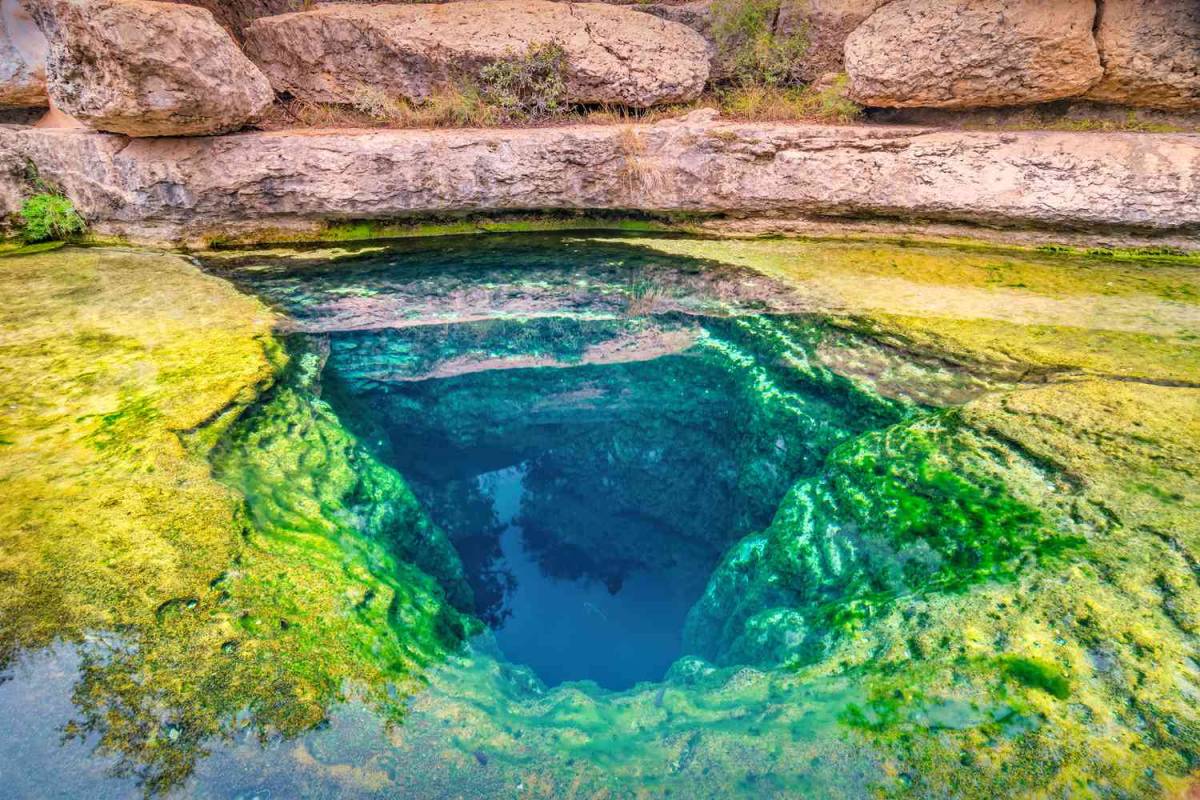
Jacob’s Well represents one of Earth’s most stunning contradictions. It is a refreshing aquatic refuge, a massive geologic archive, a spiritual metaphor etched in Texas frontier history, and a site with a sobering danger record. Its biblical name amplifies its legend, but its karst formation explains its raw power. The spring teaches a larger lesson—nature’s most inviting doors can conceal nature’s tightest choke points. Admire the blue, understand the depth, and respect the risk.






Yorumlar
Kalan Karakter: