
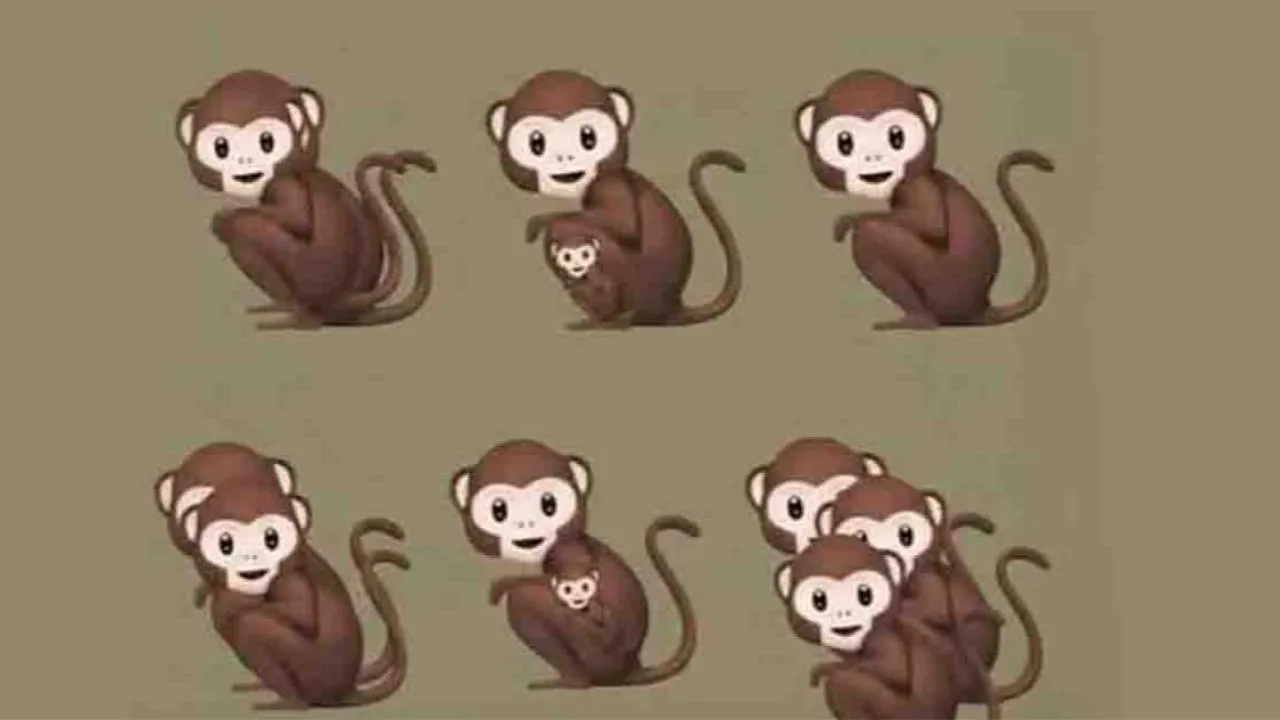
At first glance, it appears to be nothing more than a fun visual puzzle. However, the bold statement often attached to it instantly sparks curiosity: “The number of monkeys you see determines if you’re a narcissist.” As soon as people read that claim, they begin counting, comparing answers, and wondering what their result might reveal about their personality.
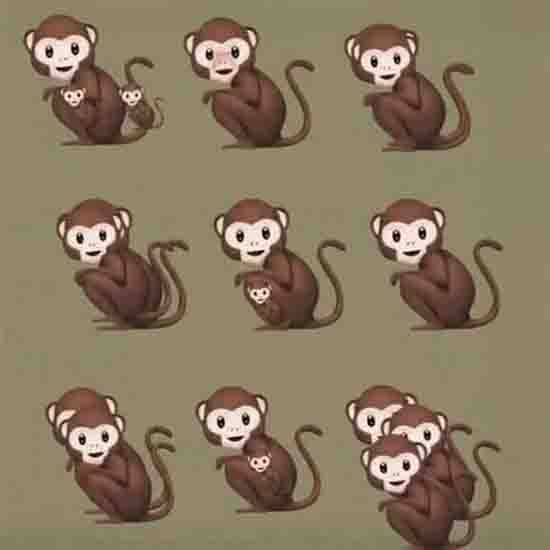
The popularity of this monkey optical illusion comes from its ability to make viewers question their own perception. Some people quickly identify a specific number of monkeys and feel confident in their answer. Others continue looking and discover hidden shapes, overlapping figures, and smaller monkey images concealed within larger ones. Suddenly, what seemed like a straightforward puzzle becomes a fascinating challenge. While the illusion does not actually diagnose narcissism, it provides an interesting opportunity to explore how the human brain processes visual information, recognizes patterns, and interprets complex images. Understanding why people see different numbers of monkeys can reveal surprising insights about perception and attention.
Why the monkey optical illusion became viral
The internet has always been fascinated by optical illusions and visual puzzles. Images that challenge perception often generate strong engagement because they encourage participation. People naturally want to know whether they see the same thing as everyone else.
The monkey optical illusion follows a familiar formula used by many viral brain teasers. It presents a seemingly simple image and pairs it with a bold psychological claim. This combination creates curiosity and encourages viewers to test themselves immediately.
Social media users often share their results, compare answers with friends, and debate the correct number of monkeys hidden within the image. These discussions help the puzzle spread rapidly across platforms. The more people disagree about the answer, the more attention the illusion receives.
How visual perception influences what you see
One of the most fascinating aspects of the monkey puzzle is that different people genuinely see different numbers of monkeys. This variation is not a sign of intelligence, personality disorders, or psychological conditions. Instead, it reflects the natural way human perception works.
The brain does not simply record visual information like a camera. Instead, it actively interprets what the eyes observe. Every second, the brain filters information, identifies patterns, and decides which details deserve attention.
Some individuals naturally focus on larger shapes and overall structures. Others are more likely to notice small details, hidden figures, and subtle visual clues. As a result, two people can examine the same image and arrive at different conclusions without either being wrong.
This process explains why optical illusions remain such powerful tools for demonstrating how perception differs from person to person.
Why the narcissism claim is misleading
Despite the popularity of the viral caption, there is no scientific evidence supporting the idea that the number of monkeys someone sees can determine whether they are a narcissist.
Narcissism is a complex personality trait that psychologists evaluate through established assessments, clinical observations, and validated psychological tools. A single image cannot accurately measure such a characteristic.
The claim exists primarily because it captures attention. People are naturally curious about themselves and often feel compelled to discover what a test or puzzle supposedly reveals about their personality. Viral content creators frequently use this curiosity to encourage engagement and sharing.
Although the monkey illusion can be entertaining, it should be viewed as a visual puzzle rather than a psychological evaluation. Treating it as a diagnostic tool would be scientifically inaccurate.
What the number of monkeys may actually reveal
While the illusion cannot identify narcissism, it may highlight differences in observation styles.
People who quickly identify only the larger monkeys may naturally prioritize broader visual patterns. They often focus on the overall image before examining smaller details. This approach can be useful when assessing situations that require seeing the bigger picture.
On the other hand, viewers who immediately notice hidden monkeys and overlapping figures may have a stronger tendency toward detailed observation. They often enjoy analyzing visual information and exploring complex patterns.
Neither approach is superior. Both represent normal variations in cognitive processing and attention. The illusion simply demonstrates that people can interpret the same visual information in multiple ways.
How optical illusions trick the brain
Optical illusions work because the brain constantly seeks efficiency. Rather than analyzing every detail individually, it relies on mental shortcuts known as cognitive heuristics.
These shortcuts help people process enormous amounts of information quickly. Most of the time, they are highly effective. However, certain images are specifically designed to exploit these shortcuts, creating confusion or multiple interpretations.
In the monkey illusion, repeated shapes, overlapping features, and hidden figures encourage the brain to organize information differently depending on where attention is directed. Once viewers discover additional monkeys, they often find it impossible to return to their original interpretation. This phenomenon demonstrates how perception can shift dramatically when new visual information becomes available.
Why people love personality-based visual tests
Many viral optical illusions become popular because they combine entertainment with self-discovery. People enjoy learning about themselves, even when the claims are not scientifically valid.
Questions such as “What do you see first?” or “How many animals can you find?” create immediate personal involvement. The viewer becomes part of the experience rather than simply observing it.
Additionally, these puzzles encourage social interaction. People compare results, challenge friends, and discuss differing interpretations. This social element transforms a simple image into a shared experience that feels both engaging and meaningful.Even when the conclusions are exaggerated, the curiosity generated by these tests keeps audiences coming back for more.
The viral monkey optical illusion is a perfect example of how visual puzzles can capture attention and spark conversation. While the claim that the number of monkeys you see determines whether you are a narcissist has no scientific basis, the image remains fascinating for another reason. It highlights the remarkable ways in which human perception varies from person to person.
Some viewers focus on obvious shapes, while others quickly discover hidden details. These differences reflect natural variations in attention, observation, and pattern recognition rather than personality disorders. The true value of the monkey illusion lies not in diagnosing character traits but in reminding us that first impressions are not always complete.
The next time you encounter an optical illusion, take a second look. You may discover hidden details that were invisible at first glance. And that simple act of looking closer can reveal something genuinely interesting about how your mind interprets the world around you.





Yorumlar
Kalan Karakter: