
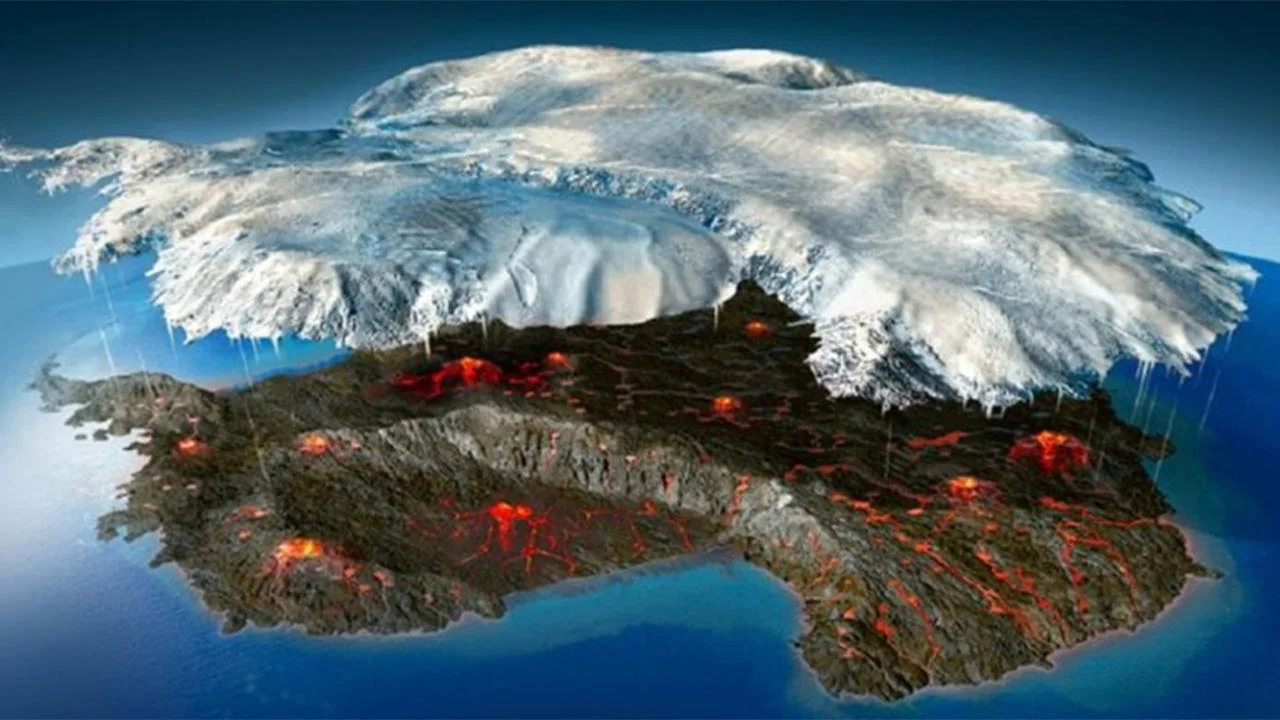
Hidden from view is one of the largest volcanic regions on Earth, containing hundreds of volcanoes buried under kilometers of ice. This surprising discovery has sparked widespread curiosity and concern, especially as Antarctica continues to lose massive amounts of ice each year. Could heat from these hidden volcanoes be melting the ice sheet from below, accelerating sea level rise? Scientists have been investigating this question closely, and the answer is more nuanced than it may first appear. Understanding the relationship between Antarctic volcanoes, geothermal heat, and ice loss is essential for separating scientific evidence from speculation and for grasping the true drivers of polar ice melt.
Volcanoes beneath Antarctica’s ice sheet
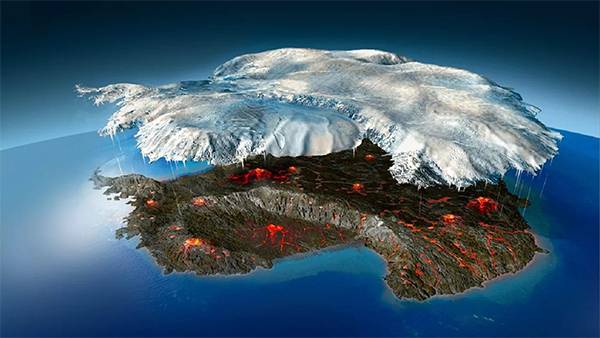
The volcanic system stretches across roughly 5,000 kilometers, from the South Sandwich Islands through West Antarctica and into parts of East Antarctica. This region is also known as the world’s largest glaciovolcanic area, where volcanic activity interacts directly with ice. Despite the impressive number of volcanoes, most are dormant or extinct, and only a small fraction show signs of recent activity.
Active volcanoes and known eruptions
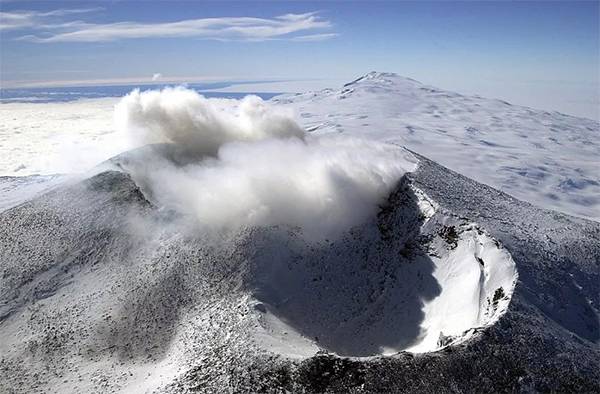
Among Antarctica’s volcanoes, only a few are considered active today. Mount Erebus is the most famous example and one of the southernmost active volcanoes on Earth. It is known for its persistent lava lake and frequent low-level eruptions. Deception Island, part of the South Shetland Islands, is another active volcanic area and has experienced eruptions in the last century.
Geological evidence suggests that some Antarctic volcanoes erupted within the last 100,000 years, as indicated by volcanic ash layers preserved in ice cores. However, there is little evidence of large-scale explosive eruptions in the recent geological past. This relative quiet has led scientists to conclude that Antarctic volcanic activity is currently low compared to many other regions of the world.
Geothermal heat and basal ice melting
One reason Antarctic volcanoes attract attention is their potential to generate geothermal heat beneath the ice sheet. Heat from Earth’s interior can melt ice at its base, producing subglacial water that lubricates glaciers and allows them to flow more rapidly toward the ocean.
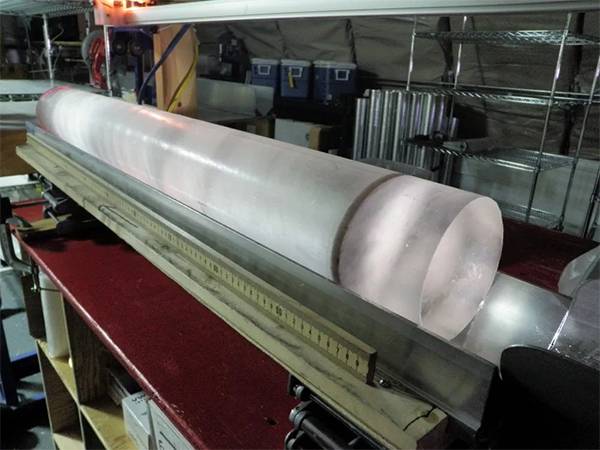
Ice core from West Antarctica. The black layer is volcanic ash that settled on the ice sheet approximately 21,000 years ago. Image credit: Heidi Roop, National Science Foundation
A notable study published in 2017 detected elevated levels of helium isotopes in meltwater beneath the Pine Island Glacier, one of Antarctica’s fastest-retreating glaciers. These isotopes are a known indicator of volcanic or geothermal activity, suggesting a heat source beneath the ice. This finding confirmed that volcanic heat exists under parts of Antarctica and does contribute to localized basal melting.
Comparing volcanic heat to ocean warming
While geothermal heat does play a role in melting ice from below, scientists emphasize that its impact is limited in scale. The amount of heat produced by subglacial volcanoes is small compared to the heat delivered by warm ocean currents circulating around Antarctica’s ice shelves.
Research consistently shows that rising ocean temperatures are the dominant driver of Antarctic ice loss. Warm water erodes ice shelves from below, weakening them and allowing inland glaciers to accelerate toward the sea. This process accounts for the majority of the estimated 146 gigatons of ice Antarctica has been losing each year since 2002.
Volcanic heat, by contrast, tends to be localized and relatively stable over long periods. It cannot explain the rapid and widespread ice loss observed across the continent in recent decades.
Antarctica’s ice sheet through geological time
The Antarctic ice sheet is millions of years old and has endured periods of far greater volcanic activity than today. Geological records indicate that the continent has experienced intense eruptions, shifting tectonic conditions, and warmer global climates in the distant past, yet the ice sheet persisted.
This long-term resilience suggests that Antarctica’s current ice loss cannot be attributed primarily to volcanism. Instead, the pace and pattern of modern melting align closely with human-driven climate change and rising global temperatures, particularly in the surrounding Southern Ocean.
Are hidden volcanoes a future threat?
Concerns that dormant volcanoes beneath Antarctica might suddenly awaken and trigger catastrophic ice melting are not supported by current evidence. Most of these volcanoes show no signs of imminent activity, and even a moderate eruption beneath the ice would likely have limited regional effects rather than continent-wide consequences.
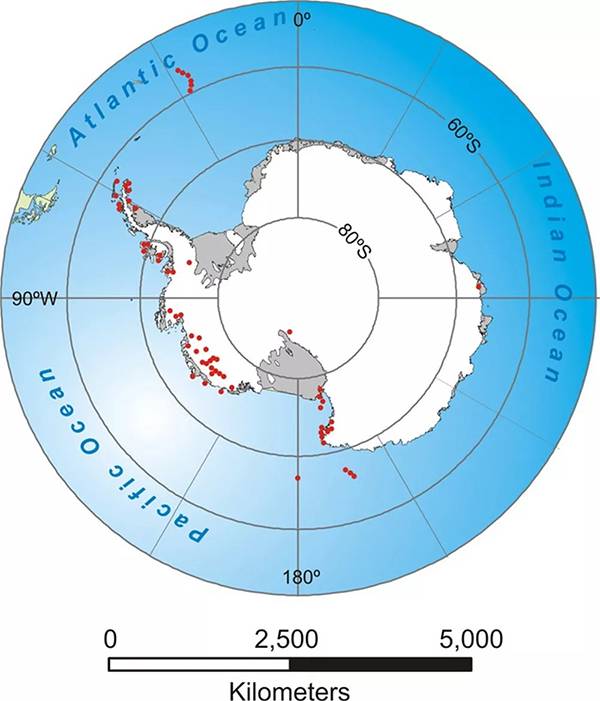
Map of Antarctica showing the location of volcanoes aged between c. 11 Ma (million years) and present. Image credit: Attribution-NonCommercial-ShareAlike
Scientists continue to monitor Antarctic geology using satellites, seismic sensors, and ice-penetrating radar. This ongoing research helps improve models of ice flow and sea level rise, but it has not revealed any indication that volcanic activity poses a major future threat to global coastlines.
What really drives Antarctic ice loss
The presence of volcanoes beneath Antarctica is a fascinating reminder that even the coldest places on Earth are geologically alive. However, the overwhelming scientific consensus is clear. While geothermal heat contributes modestly to basal melting in specific locations, it is not responsible for the large-scale loss of Antarctic ice.
The primary drivers remain atmospheric warming, rising ocean temperatures, and changes in ocean circulation linked to climate change. Understanding this distinction is crucial for accurately assessing future sea level rise and focusing global attention on the factors that truly influence Earth’s polar regions.
Antarctica’s hidden volcanoes may be dramatic, but they are not the silent villains melting the ice from below. The real story lies above the ice and in the warming waters that surround the frozen continent.







Yorumlar
Kalan Karakter: