
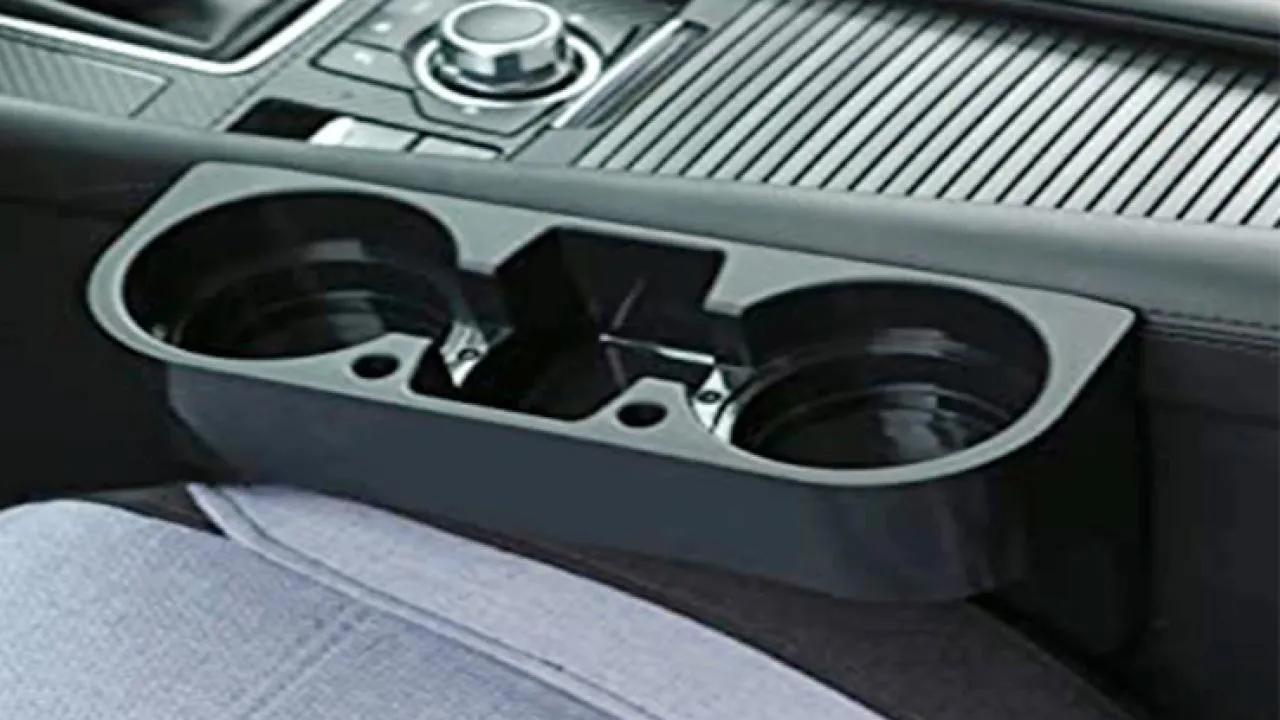
It looks too intentional to be accidental, yet most people never receive an explanation from dealerships, car manuals, or manufacturers. Some use it to squeeze in loose items like phones, receipts, sunglasses, or packs of gum, while others simply ignore it altogether.

The truth is surprisingly practical. That mysterious slot is actually a clever automotive design feature created to help stabilize grocery bags, purse straps, and other hanging items while driving. Once you understand its purpose, it suddenly becomes one of those small but brilliant conveniences that makes everyday driving easier.
Automotive designers often include subtle functional details that go unnoticed for years, and this cup holder gap is one of the best examples. It saves groceries from spilling, keeps bags upright, and helps drivers organize small items inside the car without needing extra accessories. If you have ever wondered what that weird space between cup holders is really for, the answer may completely change the way you use your car.
What the gap between car cup holders is for
The narrow opening between car cup holders is primarily designed to hold grocery bag handles or purse straps securely while the vehicle is moving. Instead of placing bags loosely on the passenger seat or floor, drivers can loop the handles through the slot so the bag hangs safely in place.
This simple design prevents groceries from tipping over during turns, sudden stops, or acceleration. It also keeps fragile items like eggs, produce, and drinks more stable during transport.
The feature works because the handles rest against the divider between the cup holders, allowing the weight of the bag to hang evenly below the console area. Since the bag remains suspended, it is less likely to slide around the vehicle.
Many drivers discover this feature by accident, but once they use it properly, it becomes surprisingly useful for daily errands and takeout runs.
Why automotive designers created this feature
Car interiors are carefully designed to maximize limited space. Automotive engineers constantly look for ways to make existing components serve multiple purposes without adding clutter or cost.
The cup holder area became a natural place to include a grocery bag holder because it is centrally located, easily accessible, and already reinforced with molded plastic. Instead of adding separate hooks or storage compartments, designers simply transformed unused space into a practical solution.
During the late 1990s and early 2000s, cup holder designs became more advanced as drivers began spending more time in their vehicles. Carmakers realized that customers frequently transported food, groceries, and personal items, creating demand for small convenience features inside the cabin.
The result was the subtle but functional slot that now appears in many sedans, SUVs, trucks, and crossovers.
How to use the cup holder gap correctly
Using the cup holder gap is extremely simple once you know its intended purpose.
Take a grocery bag by its handles and thread them through the narrow opening between the cup holders. Pull the handles downward until the bag hangs securely below the console area. The divider supports the handles while the bag remains upright and stable. This setup works especially well for lightweight groceries, fast food bags, reusable shopping bags, and small personal items.
Drivers often use the feature for:
- Grocery bags
- Purse straps
- Reusable shopping totes
- Fast food carryout bags
- Small shopping bags
- Lightweight accessories
For heavier items, caution is recommended because excessive weight can strain the plastic divider over time.
Which cars commonly include this hidden feature
The grocery bag slot can be found in many popular vehicle brands, although the design varies between manufacturers.
It is especially common in:
- Honda vehicles
- Toyota models
- Nissan cars
- Ford trucks and SUVs
- Chevrolet vehicles
- Mazda interiors
- Subaru models
Acura and Lexus vehicles
Older vehicles from the early 2000s often have the most recognizable version of the feature because center console designs were simpler and more open.
Some newer vehicles use adjustable cup holders, removable inserts, or sliding dividers instead of the traditional narrow slot. In these models, the same functionality may still exist but appear less obvious.
Why most drivers never notice the feature
One reason this feature remains unknown is because car manufacturers rarely advertise it. Unlike touchscreen systems, heated seats, or advanced safety technology, the cup holder gap is considered a small convenience feature rather than a major selling point.
Another reason is that the design blends naturally into the center console. Most people assume the opening is simply part of the molding process or an unavoidable gap in the plastic trim.
Without instructions or demonstrations, drivers rarely experiment with using the slot for grocery bags. As a result, millions of people continue driving with a hidden organizational feature sitting directly beside them.
Social media and online discussions have recently helped spread awareness, leading many drivers to realize they had misunderstood the feature for years.
Other practical uses for the cup holder slot
Although grocery bags are the primary intended use, many drivers have found additional creative ways to use the cup holder gap.
Some common alternative uses include:
- Holding a smartphone vertically
- Securing purse straps
- Organizing charging cables
- Storing parking receipts temporarily
- Supporting small umbrellas
- Holding snack bags upright
The feature is especially helpful during long drives because it keeps small items within easy reach while reducing clutter around the seats and floor area.
However, drivers should avoid placing valuables or fragile objects in the slot if they could fall through or become damaged while driving.
Why small car design details matter
The hidden cup holder gap is a perfect example of thoughtful automotive design. It shows how small details can quietly improve everyday convenience without requiring complicated technology or expensive materials.
Drivers often focus on large vehicle features like fuel economy, safety systems, and infotainment screens, but subtle design choices frequently have the biggest impact on daily comfort and usability.
Good automotive design solves real-world problems in simple ways. Preventing groceries from tipping over may seem minor, but anyone who has cleaned spilled drinks or chased rolling fruit across the floorboard understands how valuable practical storage solutions can be. This tiny feature demonstrates that clever engineering does not always need to be flashy to be effective.
The strange gap between car cup holders is not a manufacturing flaw or random design quirk. It is a cleverly engineered feature designed to hold grocery bags, purse straps, and other hanging items securely while driving.
Once you understand its purpose, the design suddenly makes perfect sense. It helps organize the interior, prevents spills, and keeps everyday items stable during travel. Despite being hidden in plain sight for decades, many drivers still have no idea what the feature was originally intended to do.
The next time you get into your car, take another look at your cup holders. That mysterious little gap may turn out to be one of the smartest hidden features your vehicle has been quietly offering all along.








Yorumlar
Kalan Karakter: