
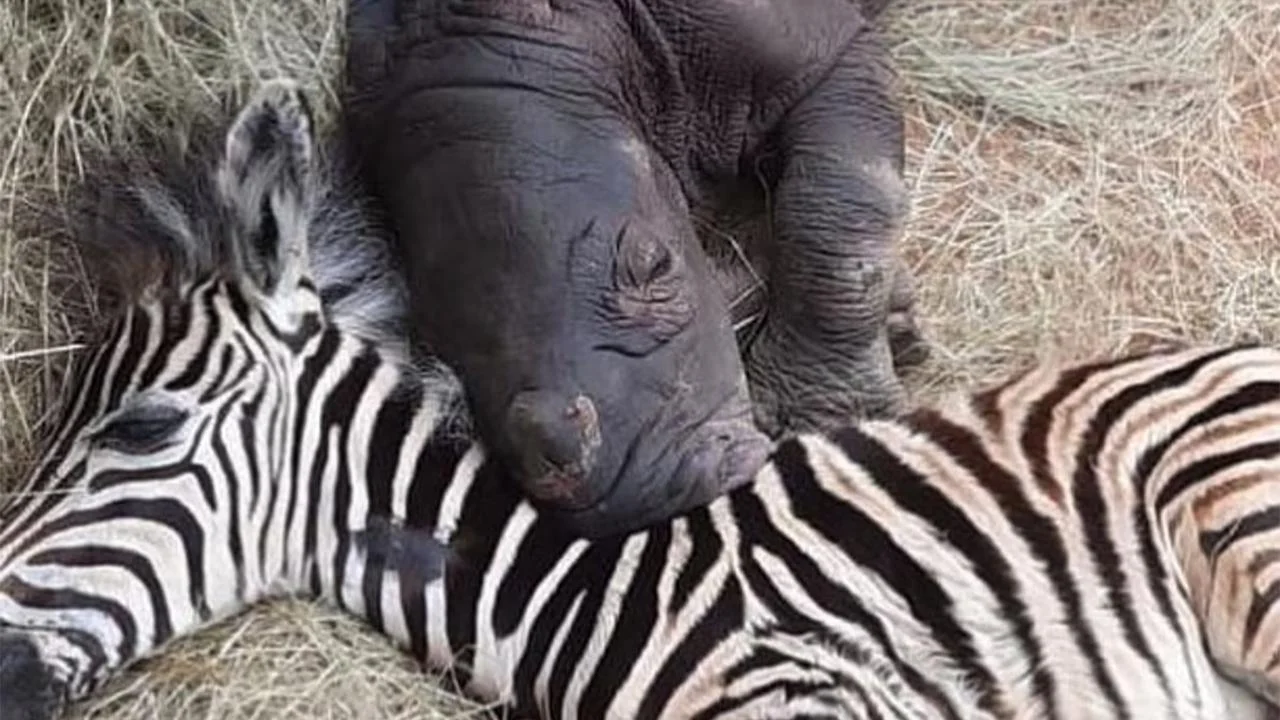
An unlikely friendship blooms in the wild
Both orphans arrived at the sanctuary under heartbreaking circumstances, yet their companionship has given them the strength to heal and thrive together.
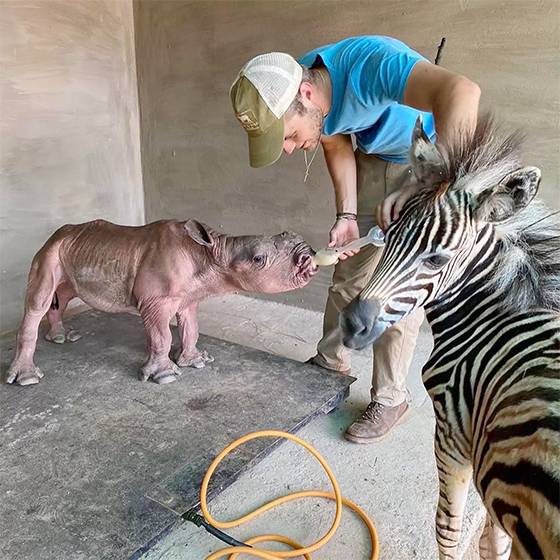
In early December, wildlife rangers discovered Daisy alone and struggling for survival in Kruger National Park. She was only a few hours old—frail, weak, and fighting for her life. Rescuers immediately transported her to the sanctuary’s intensive care unit via helicopter, where she received 24-hour care. Daisy required specialized feeding, immune system support, and temperature regulation to stay alive.
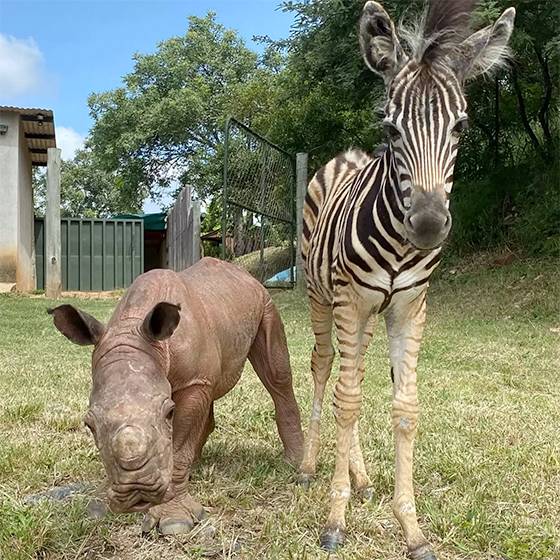
Just weeks earlier, another baby had arrived at the sanctuary—Modjadji, a zebra foal found motionless after a severe storm. Her rescuers believed she was only a week old. Though from different species, both Daisy and Modjadji shared the same pain of loss and the same will to live. What happened next would warm the hearts of everyone who witnessed it.
A bond that began with healing
When Daisy and Modjadji were first introduced, their caregivers noticed an instant connection. As each animal grew stronger, their natural curiosity drew them closer. The sanctuary’s media representative, Louwhen Bowker, shared that “rhinos are very social animals and require companionship. Modjadji is fantastic company for Daisy and very affectionate towards her.”
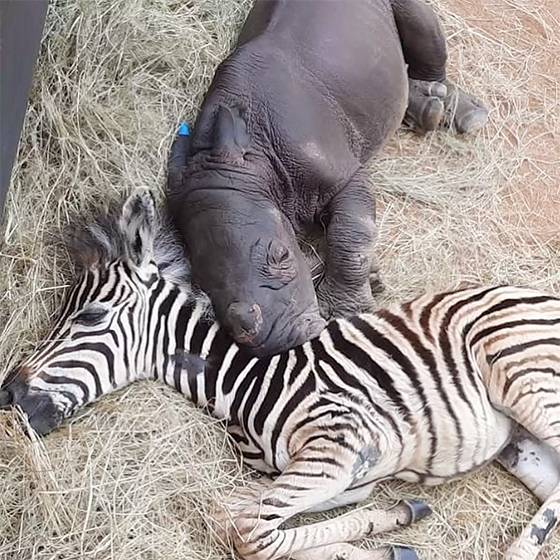
Separated from their mothers too early, both animals needed emotional comfort as much as physical healing. Modjadji’s gentle presence reassured Daisy during her long recovery. The baby zebra would often nuzzle against the rhino calf, offering a sense of security and calmness that even the sanctuary staff couldn’t provide.
Their growing friendship became an essential part of their rehabilitation process. By spending time together, Daisy learned to socialize without depending too much on humans—an important step for her eventual return to the wild.
Comfort, security, and sisterly love
Over the following weeks, Daisy and Modjadji became inseparable. They began to eat, play, and rest side by side. Caretakers often found them cuddling at night, with Modjadji’s striped body pressed gently against Daisy’s thick skin. This daily closeness helped regulate Daisy’s temperature and eased her anxiety.
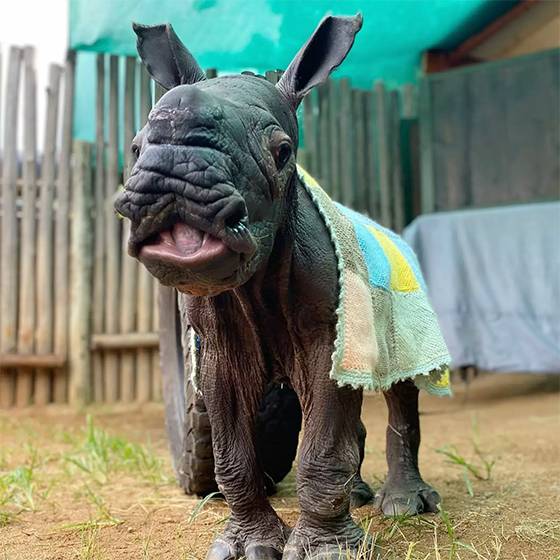
“Wherever Daisy is, Modjadji isn’t far behind,” said Bowker. “They cuddle together at night, which gives Daisy comfort and security. Modjadji is a friend that can be with her 24/7, helping reduce too much human contact with Daisy.”
Their relationship has been described as sisterly—a bond rooted in mutual trust and shared experience. For two creatures who started life in fear and isolation, finding each other was nothing short of miraculous.
Preparing for a future in the wild
As Daisy and Modjadji grow older and stronger, their caretakers are gradually preparing them for life beyond the sanctuary’s fences. The ultimate goal is to reintroduce Daisy into a protected rhino population and allow Modjadji to live freely among other zebras.
Until that day comes, the sanctuary ensures that both animals receive the care and enrichment they need to thrive. They spend their days exploring, grazing, and learning about the world together. Their friendship has become a symbol of resilience—not just for the animals themselves, but for the many conservationists fighting to protect Africa’s endangered wildlife.
The Care For Wild Rhino Sanctuary continues to play a vital role in rescuing and rehabilitating orphaned and injured rhinos, a species under constant threat from poaching and habitat loss. Stories like Daisy and Modjadji’s remind us that compassion and connection can transcend species boundaries and that healing often comes from the most unexpected friendships.
A message of hope and compassion
Daisy and Modjadji’s story is a beautiful reminder of nature’s capacity for kindness and the sanctuary’s unwavering dedication to wildlife conservation. Their friendship illustrates that love and support can overcome even the most painful beginnings. One day, these two inseparable friends will run free—each among their own kind—but their bond will always be a testament to the healing power of companionship.
To help rhinos like Daisy and support the Care For Wild Rhino Sanctuary’s mission, you can make a donation or learn more about their rehabilitation programs. Every contribution helps protect the future of Africa’s most vulnerable wildlife.






Yorumlar
Kalan Karakter: